
Water Gate Technology: Redefining the Future of Air Purification
In the pursuit of healthy indoor air, traditional purification methods face significant limitations: HEPA filters are ineffective against gaseous pollutants, activated carbon saturates quickly when adsorbing formaldehyde, and some disinfection technologies risk generating ozone. Water Gate Technology, developed by Dr. Bo Li’s team and applied by the Aimbon brand, represents a systematic innovation designed to overcome these exact challenges.
Core Principles: What is Water Gate Technology?
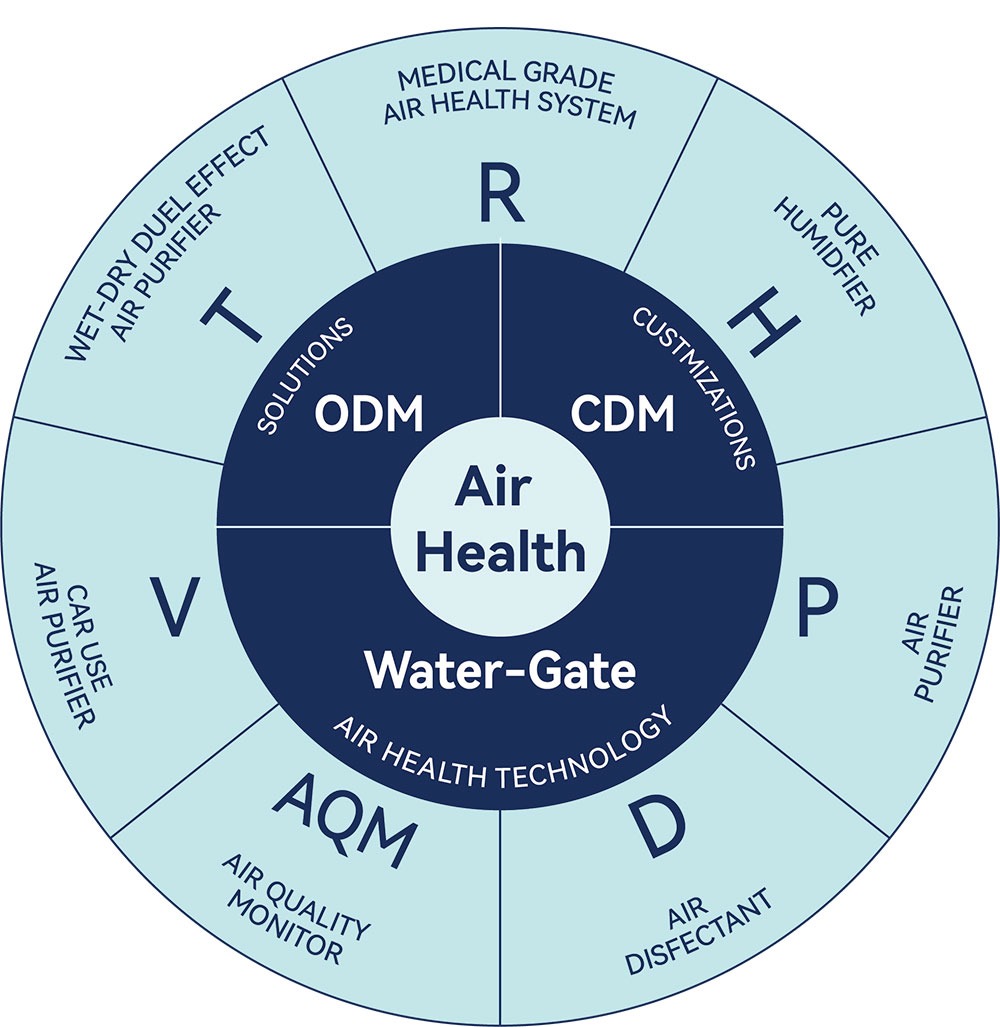
Water Gate is not a single technology but an intelligent system comprising four core units:
HEPA Filtration Module: Acts as the primary physical barrier, efficiently filtering 99.97% of particles larger than 0.3 microns (PM0.3-PM10).
Bionic Lightning Purification Module: Simulates natural lightning to generate high-energy ion clusters that bombard and decompose harmful gas molecules like formaldehyde.
Water Washing Purification Module (Core Technology): Utilizes a “T-shaped water purification filter” to create a vast nano-level purification water film via capillary action. This “water membrane” efficiently dissolves, traps, and breaks down gaseous pollutants and microorganisms processed by previous stages.
Closed-Loop Operation System: Intelligent sensors detect pollution in real-time, automatically adjust purification intensity, and form a closed purification loop within the machine. This ensures disinfecting agents do not escape, enabling safe “human-coexisting” operation.
Key Innovations and Advancements
Compared to conventional technologies, Water Gate brings fundamental changes:
Aspect Traditional Air Purification Water Gate Technology The Innovation
Target Scope Often targets single pollutant types (particulates or gases). Integrated treatment of composite pollution (particulate, gaseous, and biological). Transforms from a “specialist” into a “comprehensive solution.”
Formaldehyde Removal Primarily relies on physical adsorption by activated carbon, which saturates easily and may lead to secondary release. Decomposition by high-energy ions + dissolution and locking by the water film, breaking down formaldehyde into harmless substances. Shifts from “temporary storage” to “complete degradation,” eliminating hidden risks.
Disinfection Method Methods like UV or plasma may have blind spots or produce ozone. Disinfection via high-energy ion clusters combined with functional water (e.g., activated oxygen salt water), producing no ozone or secondary pollution. Enables safe and thorough “human-coexisting” disinfection.
System Logic Often passive filtration with fixed modes. An active purification system with intelligent sensing and closed-loop operation. Evolves from a “tool” to an “intelligent air manager.”
Technology Application and Products
This technology is already implemented in Aimbon’s commercial products:
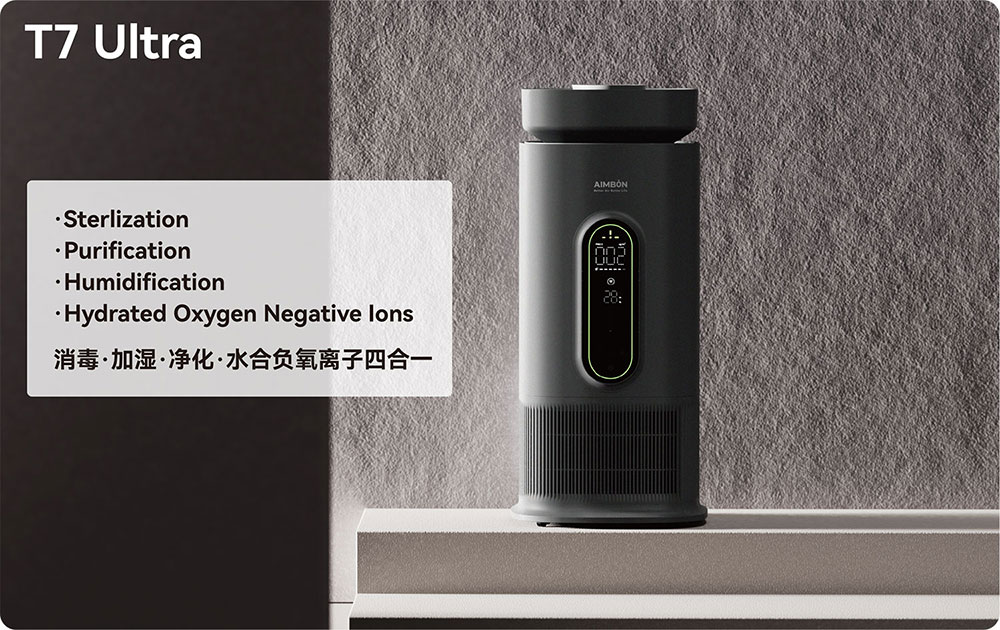
T7 Water Wash Air Purifier: Designed for home use, it purifies air while adding humidity, with a one-pass purification efficiency reported to be 30-40% higher than traditional products.
R8 Water Wash Air Disinfection Robot: Suitable for professional environments with high air safety demands, such as hospitals, laboratories, and classrooms, achieving “zero secondary pollutant” disinfection and purification.
Conclusion
In summary, the innovation of Water Gate Technology lies in its systematic integration and enhancement of existing purification methods. It replaces “adsorption” with “decomposition + water washing” and substitutes “one-way filtration” with “intelligent closed-loop” operation. The ultimate goal is to provide a comprehensive solution that can simultaneously, safely, and efficiently address all types of indoor air pollution. This marks not only a technological advancement but also a significant update to the very definition of “clean air.”