
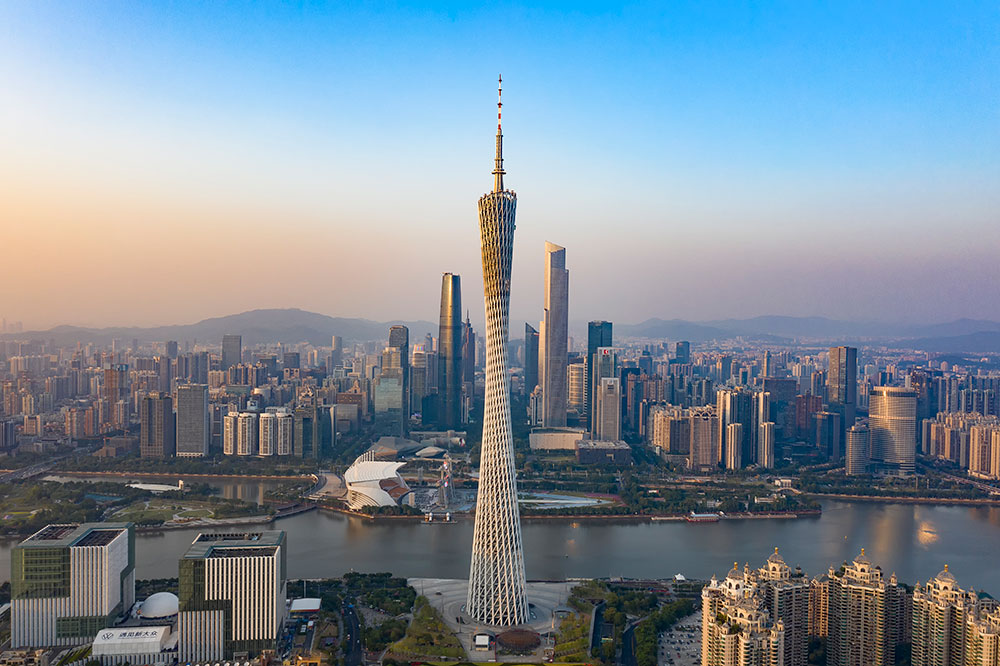
If you are considering attending a trade fair in China for the first time, you have likely heard of the Canton Fair. Officially known as the China Import and Export Fair, it is widely recognized as the largest and most comprehensive trade event in the world . Held biannually in Guangzhou (formerly known as Canton), this fair has been a cornerstone of global trade for nearly seven decades. This guide provides a comprehensive, non-commercial overview of its history, evolution, and significance for international visitors.
Origins: Why Was the Canton Fair Created?
The Canton Fair was born out of necessity. In the mid-1950s, the newly established People’s Republic of China faced significant economic sanctions and trade embargoes from Western countries, which severely restricted its ability to engage in international commerce and earn much-needed foreign currency .
In 1956, the Ministry of Foreign Trade and Guangdong Province organized a trial export exhibition in Guangzhou, which proved successful . Encouraged by this, the first official Chinese Export Commodities Fair was inaugurated on April 25, 1957, at the Sino-Soviet Friendship Building in Guangzhou . Because it was held in Canton, it quickly became known worldwide as the “Canton Fair.”
The inaugural event was modest by today’s standards—a single hall of 9,000 square meters—but it featured over 10,000 product types and attracted 1,223 buyers from 19 countries and regions . The total turnover of the first two sessions in 1957 exceeded US$86 million, accounting for a fifth of China’s total foreign exchange earnings that year .
A Journey Through Four Locations: The Evolution of the Fair’s Home
Over its 68-year history, the Canton Fair has moved four times, with each new venue reflecting China’s economic growth and the fair’s own expanding scale .
1. Sino-Soviet Friendship Building (1957): The birthplace of the Canton Fair, where the first two sessions were held. It was a 9,000-square-meter venue that set the stage for a global trade legacy .
2. Qiaoguang Road Exhibition Hall (1958-1959): The fair’s first dedicated venue, a five-story, 14,500-square-meter building that hosted the 3rd to 5th sessions .
3. Qiyi Road Exhibition Hall (1959-1973): This site became a landmark of Guangzhou, known as the “Zhuhai Danxin,” one of the city’s famous Eight Scenic Views. It served as the fair’s home for 14 years, from the 6th to the 34th session .
4. Liuhua Road Complex (1974-2008): On the eve of China’s reform and opening-up, the fair moved to this modern, 170,000-square-meter complex. It was here, from the 35th to the 103rd session, that the fair witnessed China’s integration into the global economy .
5. Pazhou Complex (2003-present): The fair’s current home is the state-of-the-art Pazhou International Convention and Exhibition Center. It was first used on a trial basis in 2003 and became the permanent venue in 2008 .
The “Never Interrupted” Fair
One of the Canton Fair’s most remarkable achievements is that it has been held every spring and autumn since 1957, without a single interruption . It has continued through periods of economic difficulty, political change, and even the COVID-19 pandemic, which led to the successful implementation of its first-ever virtual edition in 2020 . This continuity has earned it the reputation of being the “barometer” and “wind vane” of China’s foreign trade .
What Makes the Canton Fair Unique?
For first-time visitors, several features distinguish the Canton Fair from other trade events:
1. Unparalleled Scale: The fair is massive. The 138th session, held in October 2025, featured a record-breaking exhibition area of 1.55 million square meters, with over 74,600 booths and more than 32,000 exhibiting companies .
2. Comprehensive Product Range: The fair is divided into three phases, each focusing on a different set of industries, making it a true one-stop sourcing platform .
• Phase 1 (“Advanced Manufacturing”): Showcases electronics, household appliances, industrial automation, and new energy vehicles .
• Phase 2 (“Quality Home”): Features building materials, furniture, gifts, and home decorations .
• Phase 3 (“Health & Textiles”): Focuses on medical devices, textiles, garments, and personal care products .
3. Global Participation: The fair attracts a vast international audience. The 138th session welcomed over 310,000 overseas buyers from 223 countries and regions . Notably, buyer numbers from the European Union, the Middle East, and Brazil saw significant growth .
4. Showcase of Innovation: In recent years, the fair has become a premier platform for cutting-edge technology. It now features dedicated zones for service robots, intelligent healthcare, and new energy products . At the 138th session, exhibitors showcased over 1 million new products developed within the past year, and 800,000 of them were making their debut at the fair .
Beyond the Products: A Platform for Connection
For many international businesses, the Canton Fair is about more than just sourcing products. It is a vital space for building relationships. As one UAE businessman who has been attending for over two decades noted, the fair is a “platform for growth” and “a gold mine,” where the value lies in the connections you make .
The fair facilitates this through a range of services, including one-on-one business matching, seminars, and networking events. It has become an annual gathering where global buyers and Chinese manufacturers can meet face-to-face to discuss partnerships, negotiate deals, and build the trust that underpins long-term business relationships . As a French executive of a US-based brand licensing company shared, the Canton Fair has been instrumental in generating hundreds of millions of dollars in turnover .
The fair’s significance has been recognized by international partners. At the 138th session, a vice president from Nike presented a plaque to the fair’s organizers to thank them for their consistent efforts in intellectual property protection, noting that infringement complaints had dramatically decreased from a peak of 1,500 to just a few dozen per session .
A Bridge Between China and the World
Since its founding, the Canton Fair has served as a critical bridge, connecting Chinese manufacturers with global markets. It has evolved alongside China itself, moving from a showcase for light industrial goods and agricultural products to a premier exhibition of high-tech and innovative manufacturing . It is a living testament to China’s economic transformation and its commitment to open global cooperation. For any business looking to understand the Chinese market, source high-quality products, or forge lasting partnerships, the Canton Fair remains an essential event on the international trade calendar.