
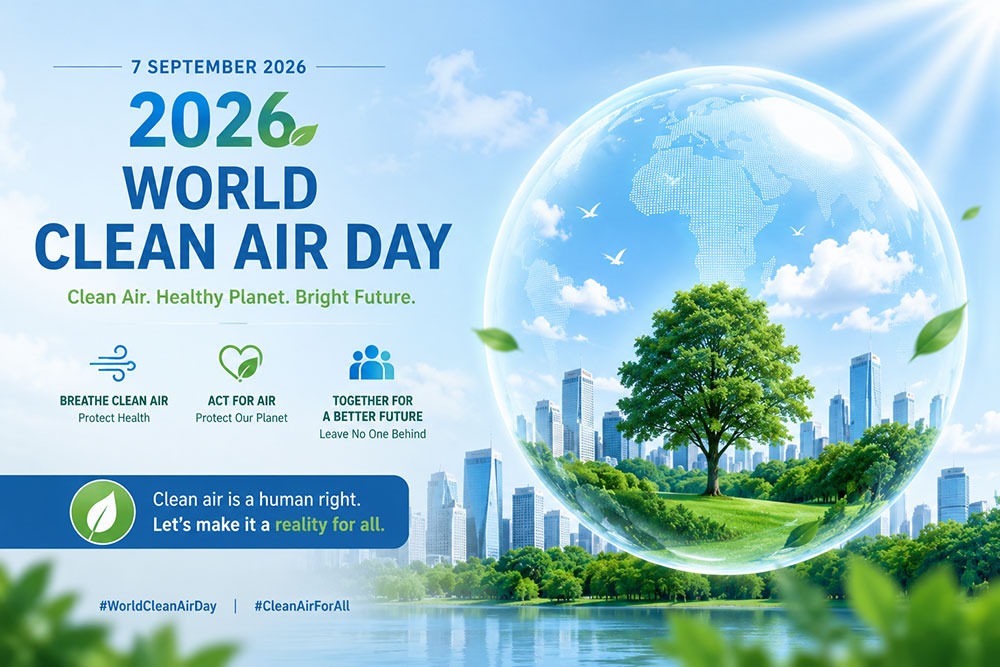
Every year on 7 September, the world observes the International Day of Clean Air for blue skies – commonly known as World Clean Air Day. Established by the United Nations General Assembly in 2019, this day serves as a global call to action, reminding us that clean air is not a luxury but a fundamental human right.
As the seventh observance approaches on 7 September 2026, the urgency has never been greater. Air pollution remains the greatest environmental threat to human health, causing approximately seven million premature deaths annually. This year’s campaign, themed “Clean Air for Climate Action,” underscores the undeniable link between air quality and climate change – and the economic case for tackling them together.
The Purpose of World Clean Air Day
The United Nations General Assembly designated 7 September as the International Day of Clean Air for blue skies to raise public awareness at all levels and to promote actions that improve air quality. The day serves multiple critical purposes:
- Raise Awareness: It brings global attention to the health, environmental, and economic impacts of air pollution.
- Inspire Action: It encourages individuals, communities, governments, and businesses to take practical steps to reduce emissions.
- Build a Global Community: It fosters collaboration across nations, sectors, and generations to tackle air pollution together.
- Highlight Solutions: It showcases proven measures and technologies that can deliver cleaner air, healthier lives, and shared prosperity.
As UN Secretary-General António Guterres stated: “Air pollution is a global emergency – and a preventable one. Let us take urgent steps today, for clean, breathable air for all.”
2026 Theme: Clean Air for Climate Action
This year’s observance is built around a powerful new report from the UN Environment Programme (UNEP) and the Climate and Clean Air Coalition (CCAC). The Global Economic Assessment of Integrated Climate and Clean Air Action presents the strongest economic case yet for coordinated action.
Key findings from the report include:
- Coordinated action through 25 proven measures can simultaneously improve public health, strengthen economies, and accelerate progress on climate goals.
- The economic benefits of integrated climate and clean air action far outweigh the costs, supporting healthier populations and economic prosperity.
- Many sources of air pollution – such as fossil fuel and biomass burning – also drive climate change. Addressing them together unlocks greater benefits than tackling them separately.
The theme reflects a growing understanding that air pollution and climate change are two sides of the same coin. Higher temperatures accelerate ground-level ozone formation, while heatwaves and stagnant air trap pollutants closer to the ground – creating a vicious cycle that worsens both problems.
Who Is Most Affected by Air Pollution?
Air pollution affects everyone, but it does not affect everyone equally. The most vulnerable populations bear the heaviest burden:
- Children: Their lungs are still developing, and they breathe more air per pound of body weight than adults.
- Pregnant individuals and babies: Exposure to air pollution has been linked to adverse birth outcomes and developmental issues.
- Older adults: They are more susceptible to the cardiovascular and respiratory effects of polluted air.
- People living in poverty: They often live near pollution sources and have less access to healthcare and protective measures.
- Historically marginalised communities: Systemic inequities mean these communities are disproportionately exposed to air pollution.
How You Can Take Action
World Clean Air Day is an opportunity for everyone to take small, practical steps to improve air quality. Here are some actions you can take – at home, in your community, and beyond:
At Home
- Improve indoor air quality: Use a high-quality air purifier with HEPA and activated carbon filtration to remove particles, VOCs, and odours. This is especially important for bedrooms, where we spend one-third of our lives.
- Ventilate wisely: Open windows when outdoor air quality is good to reduce indoor CO₂ and pollutant build-up. During high-pollution days, keep windows closed and rely on air purifiers.
- Choose low-VOC products: Opt for water-based paints, natural cleaning products, and furniture with low formaldehyde emissions.
- Maintain your appliances: Regularly clean air conditioner filters and ensure your HVAC system is functioning efficiently.
In Your Community
- Choose cleaner transport: Walk, cycle, or use public transport instead of driving. If you must drive, consider carpooling or switching to an electric vehicle.
- Support local clean air initiatives: Participate in community tree-planting events, advocate for low-emission zones, and support policies that reduce traffic congestion.
- Educate others: Share information about air pollution and its health impacts with family, friends, and colleagues.
- Reduce waste burning: Avoid burning garden waste or rubbish, and encourage proper waste management in your community.
At Work and School
- Advocate for better ventilation: Encourage your workplace or school to monitor indoor air quality and invest in air cleaning technologies.
- Promote active travel: Support initiatives like bike-to-work schemes or safe walking routes for students.
- Reduce energy consumption: Turn off lights and equipment when not in use, and support energy-efficient building upgrades.
Support Broader Change
- Stay informed: Follow the latest research and policy developments on air quality and climate action.
- Use your voice: Contact your elected representatives and urge them to support stronger air quality standards and climate policies.
- Share on social media: Use the hashtag #CleanAirDay to spread awareness and inspire others to take action.
- Participate in events: Join local or virtual observances of the International Day of Clean Air for blue skies. UNEP is hosting a regional commemoration in Bangkok on 7 September 2026, with hybrid participation options.
The Bigger Picture: Why This Matters
Clean air is not just about breathing easier – it is about building a more just, prosperous, and sustainable world. The 2026 Clean Air Day campaign highlights how integrated climate and clean air action can:
- Save lives: Reducing air pollution prevents premature deaths and reduces the burden of respiratory and cardiovascular diseases.
- Strengthen economies: Cleaner air means healthier workers, lower healthcare costs, and increased productivity.
- Protect the planet: Many air pollution measures also reduce greenhouse gas emissions, helping to limit global warming.
- Advance equity: Clean air initiatives can reduce the disproportionate pollution burden on vulnerable and marginalised communities.
The evidence is clear: the cost of inaction is far greater than the cost of action. As UNEP and CCAC’s new report demonstrates, we have the tools and the knowledge to solve this problem. What we need now is the will to act – together.
Conclusion: Every Breath Counts
On 7 September 2026, join millions around the world in observing the International Day of Clean Air for blue skies. Whether you choose to walk instead of drive, install an air purifier in your home, advocate for cleaner policies, or simply share information with your community – every action counts.
Clean air is not a luxury. It is a right. And it is a right we can protect – one breath, one action, one day at a time.
This Clean Air Day, take a step towards cleaner air. Your lungs – and the planet – will thank you.
Aimbon · Water‑Gate Technology – purifying and humidifying in one, safeguarding every breath for a cleaner, healthier world.