
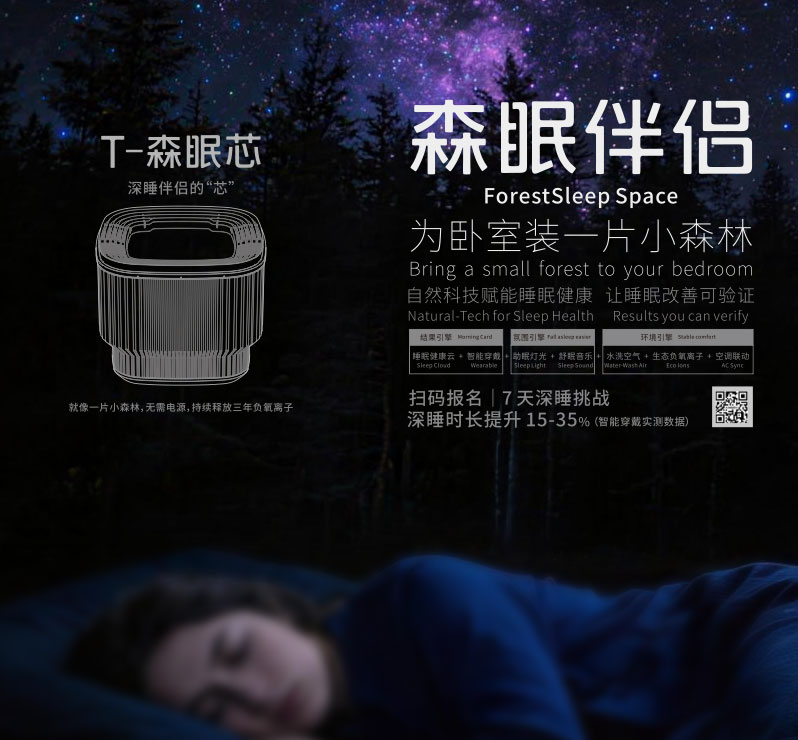
Have you ever noticed what the last thing you see before falling asleep each night is?
It might be the blue glow of your phone screen, the harsh bulb of your bedside lamp, or a sliver of streetlight sneaking through the curtains. This “last light” is quietly telling your brain: it is not yet time to sleep.
Aimbon’s newly positioned Sleep Environment Health System (SEHS) focuses on more than just air. It treats the bedroom as a complete sleep ecosystem – air, humidity, sound, temperature, and light – every dimension influences how quickly you fall asleep and how deeply you rest. Among these, the most overlooked yet immediately impactful variable is the light environment.
I. Light Is the Master Switch of Sleep
Inside the human body, a biological clock senses ambient light through the retina to regulate melatonin secretion. Melatonin is the “sleep hormone” secreted by the brain – it does not force you to sleep, but tells you “it is time to prepare for sleep.”
When the sun sets and the environment dims and warms, the retina sends signals to the suprachiasmatic nucleus (SCN), and the pineal gland begins to secrete melatonin. About one to two hours before lights-out, melatonin levels rise, and you start to feel heavy eyelids and a slowing mind.
But if your eyes continuously receive bright, cool-toned (blue-rich) light before bed, your brain mistakes it for daytime, and melatonin secretion is suppressed. The result: you lie in bed exhausted, but your mind is wide awake.
This is why the quality of your pre‑sleep light environment directly determines how fast you fall asleep and how well you sleep.
II. The “Light Pollution” in Most Bedrooms – Unnoticed
We habitually do many things before sleep: scroll through phones, use tablets, turn on overhead lights to tidy up, fumble for a glaring switch when getting up at night… each type of light, to varying degrees, disrupts your sleep preparation.
Phone/Tablet Screens: Even in night mode, screens still emit significant blue light. Studies show that using electronic devices for two hours before bed can reduce melatonin secretion by about 22%.
Bedroom Overhead Lights: Most bedroom main lights have a color temperature of 4000K‑6500K (cool white), with high brightness and a large blue component. When you are trying to fall asleep under such light, it is like telling your brain “it is noon.”
Night Lights or Hallway Light: If you wake up in the middle of the night and turn on a bright light, your brain switches from sleep mode to daytime mode instantly, making it difficult to fall back asleep.
Light Leaking Through Curtains: Streetlights, neighbors’ lights, moonlight – these external light sources can disrupt sleep continuity, especially during light sleep stages.
Each of these issues alone may have a small effect, but together they constitute the “light pollution” of a bedroom – and most people are completely unaware of it.
III. Aimbon SEHS Light Environment Solution: From “Illuminating” to “Guiding Sleep”
Aimbon SEHS is not just an air purifier; it is a Sleep Environment Health System. It treats the bedroom as a whole, using sensors, smart control, and scientific algorithms to coordinate air, humidity, sound, temperature, and light.
In terms of light environment, SEHS follows three core principles:
1. Sunset Simulation: Rehearsing Sleep with Gradual Light Changes
The SEHS system can automatically dim and warm the bedroom lights from regular illumination to a low, warm glow during a preset “wind‑down” time (e.g., 30‑60 minutes before your target bedtime). Color temperature gradually drops from 3000K to 1800K (candlelight), and brightness falls from 100% to below 10%. This process mimics a natural sunset, giving the brain a clear signal: night has come, it is time to secrete melatonin.
Users do not need to adjust any switches manually. SEHS automatically executes this “sunset program” based on your target bedtime.
2. Blue Light Filtration and Low Color Temperature Lighting
Within the SEHS ecosystem, all sleep‑related light sources (bedside lamps, night lights, reading lights) use low‑blue, low‑color‑temperature (≤2700K) LEDs. If you need to read before bed, you can use the dedicated “reading mode” – light is concentrated only on the page, not stimulating the surrounding environment, while the warm yellow hue does not interfere with melatonin secretion.
For unavoidable electronic screens (phones, tablets), SEHS automatically switches them to “dark mode + blue light filter” one hour before bedtime via a companion app or smart home integration, further reducing blue light exposure.
3. Non‑Intrusive Nighttime Illumination
Need to get up in the middle of the night? The SEHS floor‑level motion sensor light or micro night light automatically turns on, emitting very low brightness (≤5 lumens), deep red (wavelength >620nm) light. This red light has the longest wavelength, causing the least suppression of melatonin secretion, while still providing enough visibility to see the floor and path. When you return to bed, the light automatically turns off within 15‑30 seconds, preventing full wakefulness.
IV. Synergy Between Light Environment and Air Environment: 1+1>2
The real advantage of SEHS is system synergy. The light environment helps you fall asleep faster, while the air environment helps you sleep deeper and more steadily. Together, their effect is far greater than optimizing either alone.
When the “sunset program” starts and the bedroom light dims, the air system of SEHS also adjusts simultaneously:
• Fan speed automatically reduces to sleep mode (noise <25dB)
• Humidity is controlled between 45%‑55% to prevent dry throat
• The negative ion generator runs at low power, creating a forest‑like sense of tranquility
Your body prepares for sleep under the cue of light, while your airways relax in moist, clean air. This synergy makes the transition from wakefulness to deep sleep remarkably natural.
V. Perceivable and Verifiable: The Effect of Light Environment Improvement
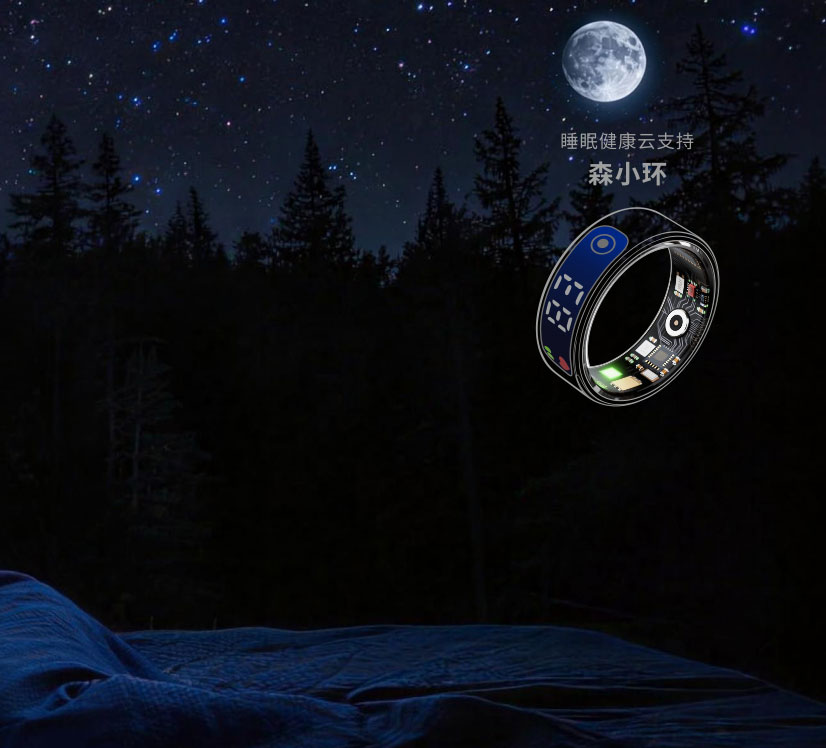
Aimbon SEHS not only provides environmental regulation but also uses the Forest Ring (smart ring) and Sleep Health Cloud to let users visually see the sleep improvements brought by changes in the light environment.
Real user data shows:
• After using the SEHS light environment program, average sleep onset time shortened by 18‑25%
• Nighttime micro‑awakenings reduced by more than 30%
• Morning “sleep inertia” (grogginess) significantly decreased
These are not subjective feelings; they are objective data recorded by the Forest Ring – heart rate, blood oxygen, body movement, sleep staging. Users can see visual reports on their phones, such as “whether last night’s light program was executed” and “how deep sleep increased after execution.”
VI. Not Smart Home, But a Sleep Health System
Smart home systems can also dim lights and set scenes, but their goal is often “ambience” or “convenience.” Aimbon SEHS targets health. Every light parameter is backed by sleep science; every automatic adjustment is guided solely by your bedtime.
You do not need to be a lighting expert or manually switch modes. You simply tell SEHS: “I plan to sleep at 11 PM.” Then, starting at 10 PM, the bedroom lights slowly dim and warm; the air becomes moist and clean; sound fades to near‑silence. You just lie down, close your eyes, and wait for sleep to naturally arrive.
VII. Conclusion: What Color Should the Last Light Before Sleep Be?
Aimbon SEHS gives its answer: warm yellow, low brightness, quietly extinguishing itself.
It is not just a lamp; it is a system that understands the rhythm of sleep. It knows when you need to relax, when to become quiet, and when to be completely dark. When your bedroom is surrounded by such a light environment, falling asleep is no longer something you have to try at – it becomes something that naturally happens.
Tonight, try turning off the glaring overhead light, putting down your phone, and letting SEHS light that last gentle glow before sleep. Your brain will thank you, and your deep sleep will reward you.
Aimbon · Sleep Environment Health System (SEHS) – Building a complete deep‑sleep ecosystem for your bedroom, helping you fall asleep faster, sleep deeper, and wake fewer times.