
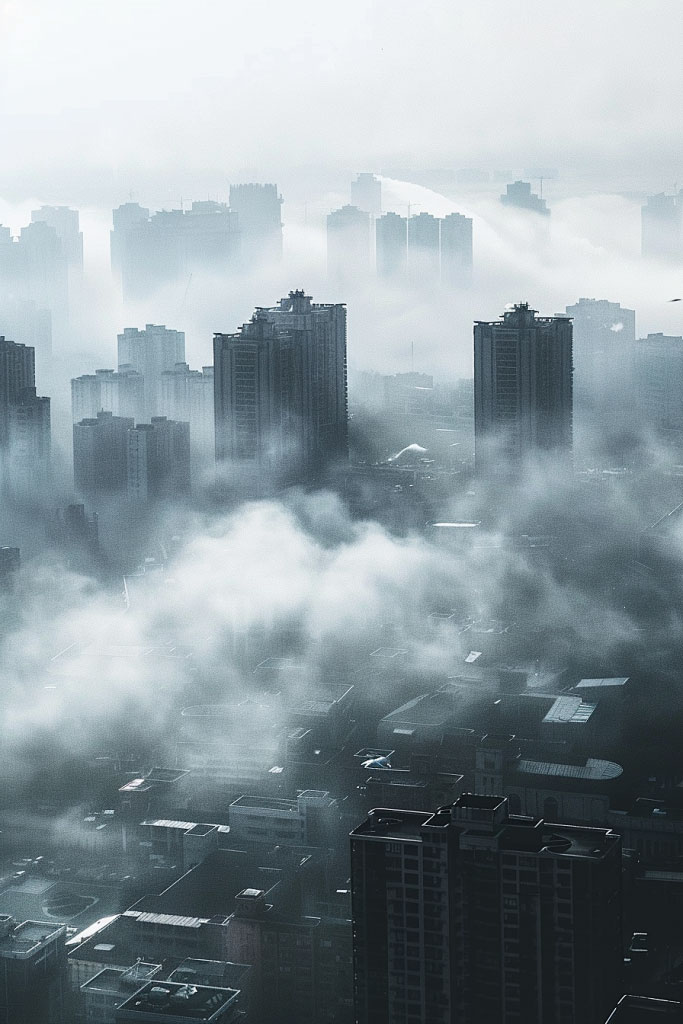
Fatal Breath: Global Air Pollution Claims 7 Million Lives Annually, Making Personal Protection Urgent
When you open your window in the morning or walk on your commute, every breath you take may be quietly costing you your health. This is not an alarmist statement but a persistent warning from the World Health Organization (WHO): air pollution has become the single largest environmental health threat globally, causing approximately 7 million premature deaths every year. This figure exceeds the total deaths from AIDS, malaria, and tuberculosis combined. It signifies a silent public health crisis unfolding around us every moment.
Part 1: Alarming Data: A Global Health Disaster
According to the latest WHO reports, a staggering 99% of the world’s population breathes air that exceeds its safety guidelines. The health burden from this exposure is severe and brutal. Air pollution is a leading risk factor for diseases such as stroke, ischemic heart disease, chronic obstructive pulmonary disease (COPD), lung cancer, and acute lower respiratory infections. Its harm has been ranked as a “fifth major risk factor” alongside the four traditional risks for non-communicable diseases (tobacco use, unhealthy diet, physical inactivity, and harmful use of alcohol).
Pollutants like fine particulate matter (PM2.5) can penetrate the multiple barriers of the human respiratory system, reach the alveoli, and enter the bloodstream, causing damage to organs throughout the body and even increasing the risk of Alzheimer’s disease. The distribution of this tragedy is not even; it falls most cruelly on vulnerable populations and regions with scarce medical resources. Reports from the World Air Quality Index (AQI) indicate that cities in countries like Chad, the Democratic Republic of the Congo, Bangladesh, Pakistan, and India face the most severe air pollution levels.
Pollution sources are mainly divided into two categories:
Outdoor (Ambient) Pollution: Primarily from the combustion of fossil fuels, including industrial emissions, vehicle exhaust, and energy production. The International Energy Agency (IEA) has estimated that such pollution causes about 3 million deaths annually.
Household (Indoor) Air Pollution: In many developing countries, households still use stoves burning wood, coal, or animal dung, leading to severe indoor air pollution. According to IEA statistics, this causes about 3.5 million deaths per year.
Part 2: Global Governance: From Macro Policies to City Actions
Faced with this crisis, the international community has taken action. At the Seventy-eighth World Health Assembly in 2025, countries adopted a new roadmap setting a voluntary target to “reduce the health impact of air pollution by half by 2040.” The core strategy is to synergistically improve air quality by reducing greenhouse gas emissions that cause climate change, as air pollution and the climate crisis are essentially “two sides of the same coin.”
Some cities have achieved remarkable results through determined measures. For example:
Beijing, Seoul (South Korea): By implementing strict regulations on vehicles, power plants, and industrial pollution.
Rybnik, Poland: Vigorously promoting clean energy and investing in public transportation.
These success stories prove that strong public policies are fundamental to improving ambient air quality on a large scale. However, macro-level governance takes time and cannot completely eliminate all pollution, especially when we spend about 80-90% of our time indoors.
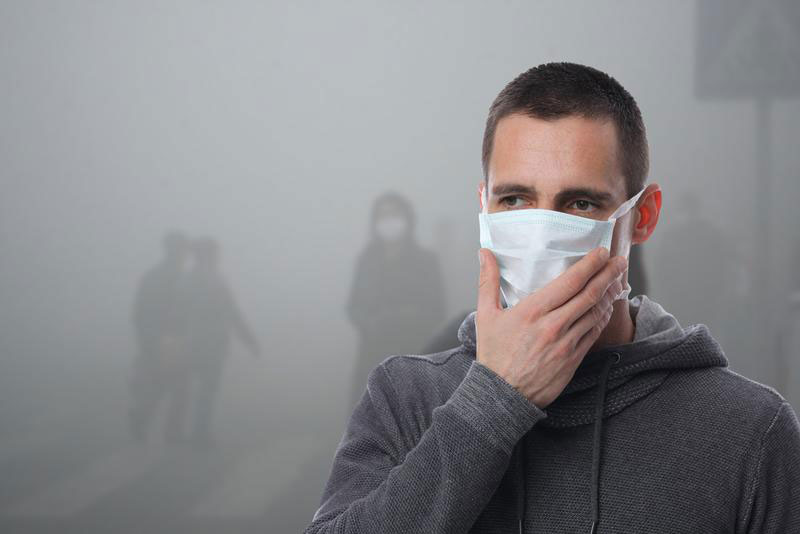
Part 3: The Indoor “Last Line of Defense”: Why Air Purifiers Are Indispensable
While public governance advances, protecting personal and family respiratory health and creating an indoor “clean air sanctuary” becomes crucial. This is the key role air purifiers play.
After decades of development, air purification technology can now specifically address three major categories of indoor pollution:
Particulate Matter (PM): Such as PM2.5, dust, pollen, and pet dander. High-Efficiency Particulate Air (HEPA) filters are the mainstream technology for this type of pollution, with filtration efficiency of over 99.97% for particles as small as 0.3 microns. Electrostatic precipitation technology is also effective at removing particles.
Gaseous Pollutants: Such as formaldehyde, benzene series, volatile organic compounds (VOCs), and odors. Activated carbon adsorption is a widely used method, with its porous structure effectively trapping gas molecules. More advanced technologies like photocatalytic oxidation (PCO) and thermal catalytic oxidation (TCO) can decompose harmful gases into harmless water and carbon dioxide.
Biological Pollutants: Such as bacteria, viruses, and mold spores. In addition to physical capture by HEPA filters, technologies like ultraviolet germicidal irradiation (UVGI/UVC), ozone sterilization (requires use in unoccupied spaces), and certain ion technologies also possess disinfection capabilities.
Experts point out that in the face of public health threats like the COVID-19 virus transmitted via aerosols, using appropriate air purifiers is an effective auxiliary protection measure, provided that ventilation is also ensured. Experts from institutions like the Taipei University of Technology summarize that source control, ventilation, and air purification are the “three essential strategies” for ensuring good indoor air quality.

Conclusion: Taking Responsibility for Every Breath You Take
The global figure of 7 million deaths per year is not just a cold statistic; it represents countless shattered families and preventable tragedies. Governing air pollution undoubtedly requires continuous effort and collaboration from governments and international organizations.
However, until blue skies become a common reality, proactively creating a clean indoor breathing environment for yourself and your family is no longer a luxury but a necessary component of modern healthy living. Choosing a reliable, technologically sound air purifier that suits your needs is like installing an invisible “safety door” for your family’s lungs. This is both a powerful supplement to macro-level governance and a practical, wise, and responsible act of self-protection in the face of current environmental challenges. After all, as scientists like Fatima Ahmed have noted, “If water is dirty, you can tell people to wait half an hour before drinking. But if the air is dirty, you cannot ask people to stop breathing.”