
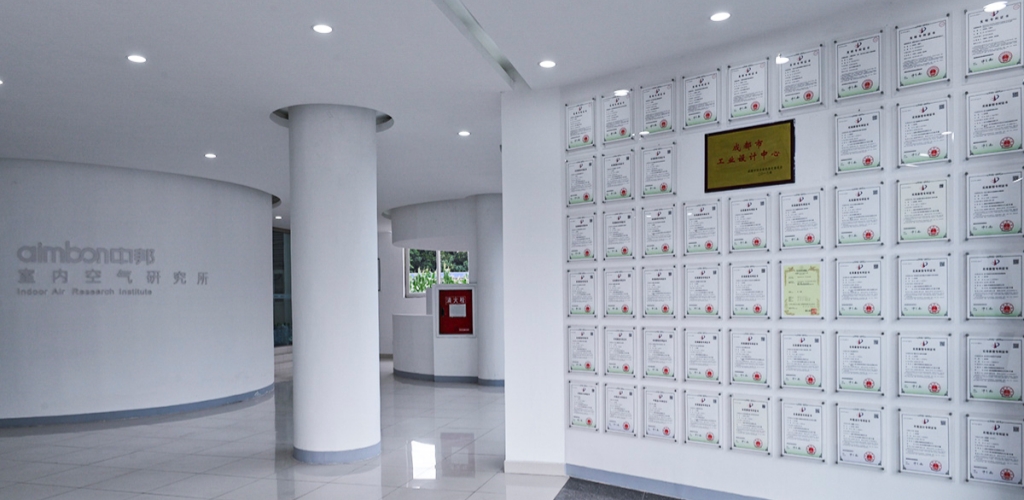
Patents & certificates & Trophies & Certifications
Certification is the part of sourcing that looks like paperwork until a container is stopped at the port. Then it becomes the most expensive line item in the project.
The confusion is usually about three different things being called the same name: a standard, a test report, and a mark. A supplier says “we have CE” and everyone nods, while nobody checks whether the technical file exists, whether the report covers your model, or whose name is printed as the applicant.
This is a market-by-market breakdown of what each certification actually is and who should hold it.
Key takeaways
- CE is a declaration, not a certificate. The deliverable is a technical file and a signed declaration of conformity.
- CB is not market access. It is a report that converts into national approvals and saves retesting.
- UL and ETL are equivalent in acceptance. Both require factory surveillance, not just a test.
- The applicant name on each document decides whether you can use it for your own listing.
- Re-test after any BOM change. A certificate covers the sample, not the product family forever.
A standard, a report, and a mark are not the same thing
| Term | What it is | Who issues it | What it lets you do |
|---|---|---|---|
| Standard | The test method and limits, e.g. IEC 60335-2-65 | IEC, CENELEC, UL, national bodies | Nothing on its own — it defines how you prove compliance |
| Report | Test results from a lab against that standard | Accredited laboratory | Evidence for a declaration or a national approval |
| Mark | CE, UKCA, KC, UL, ETL, RCM, PSE | Self-declared or a certification body | Legal access to that market |
Most sourcing disputes come from mixing these up. “We have the report” is not the same as “you can ship”, and “we have the mark” is not the same as “your brand is covered”.
CE: a declaration you sign, not a badge you buy
For an air purifier sold in the EU, CE marking means you have assessed the product against the applicable directives and signed a declaration of conformity. There is no EU authority that issues a “CE certificate” for a standard appliance.
The directives that usually apply:
- LVD 2014/35/EU — electrical safety, for equipment in the 50–1000 V range.
- EMC 2014/30/EU — electromagnetic compatibility.
- RoHS 2011/65/EU — restricted substances, ten of them since the 2015 amendment.
- WEEE 2012/19/EU — registration and take-back, done per member state.
Two obligations are frequently missed. The first is the technical file: a test report alone is not a technical file. It must include the risk assessment, the BOM, the schematics, the label artwork, and the instructions in the language of the market.
The second is the EU responsible person. Under the General Product Safety Regulation that applies since December 2024, a product sold in the EU needs a named economic operator established in the EU. If your brand is outside the EU and your supplier is in China, somebody has to hold that role — and it is usually not the factory.
Air purifiers do not carry an EU energy label. If a supplier shows you one, ask which regulation it comes from.
CB: the report that saves you four retests
A CB report is issued under the IECEE scheme, against IEC 60335-1 plus IEC 60335-2-65, the part that covers air cleaning appliances. It is recognised by more than fifty participating countries.
It is not a mark, and it does not give market access anywhere. What it does is let a national certification body issue its own approval with less retesting, because the underlying test data is accepted.
That makes CB the highest-leverage document in the stack. One report can feed the EU technical file, a KC application, and several other national approvals. When a supplier already holds a CB report for the platform, your certification timeline drops from months to weeks.
Ask for the CB certificate number and check the model list on it. A report that covers the 220 V model does not automatically cover the 120 V variant.
US and Canada: FCC for emissions, UL or ETL for safety
Two separate regimes, often conflated by suppliers.
FCC governs radio frequency emissions. Most air purifiers fall under Part 15 Subpart B as unintentional radiators. If the unit includes a Wi-Fi or Bluetooth module, that module needs its own certification — usually a modular approval you inherit from the module maker. Some high-voltage ioniser designs are assessed differently, so ask which part the lab applied.
Safety is where the standard choice matters. UL 507 covers electric fans; UL 867 covers electrostatic air cleaners. Which one applies depends on how the unit cleans the air, not on what it is called in the catalogue. The harmonised UL 60335-2-65 also exists, and many labs now test against it.
UL and ETL are both accepted in the US market. ETL is issued by Intertek; UL by Underwriters Laboratories. A buyer or a retailer may prefer one, but neither is legally superior.
One detail decides whether the listing is real: follow-up service. A UL or ETL mark requires the factory to be under periodic surveillance inspections. A test report without follow-up service is a document, not a listing.
Korea, Japan, UK, Australia
| Market | Mark | Who applies | Note |
|---|---|---|---|
| Korea | KC | A Korean entity | Safety plus EMC; a local representative is mandatory |
| Japan | PSE | Japanese importer | Most purifiers are non-specified items: self-declaration with METI notification |
| UK | UKCA or CE | The UK importer | CE continues to be accepted for most goods in Great Britain |
| Australia | RCM | Australian supplier | Covers EMC and electrical safety in one mark |
The matrix, in one view
| Market | Safety | EMC / RF | Other |
|---|---|---|---|
| EU | LVD, via CE self-declaration | EMC Directive | RoHS, WEEE registration, EU responsible person |
| US | UL 507 / 867 / 60335-2-65, or ETL | FCC Part 15B | Follow-up service at the factory |
| Canada | cUL or cETL, CSA equivalents | ISED (if wireless) | Separate Canadian listing |
| Korea | KC safety | KC EMC | Korean applicant |
| Japan | PSE | VCCI (if digital) | METI notification |
| Australia | RCM | RCM | Australian supplier of record |
Five mistakes that cost the most
- Accepting a certificate in the factory’s name. It proves the factory can build a compliant unit. It does not prove your model, under your brand, is covered.
- Treating CE as a certificate. If nobody can produce the technical file and the signed declaration, the mark on the box is decoration.
- Assuming CB is market access. It is an input, not an approval. Shipping on a CB report alone will stop at customs.
- Testing the golden sample. Certification must reflect production. A unit assembled by the engineer who designed it is not the unit in the container.
- Ignoring label and manual language. A compliant product with an English-only manual fails in Germany, France, and Korea for reasons that have nothing to do with engineering.
What to ask before you compare quotes
- Which standards were tested, and can I see the report’s cover page with the model list?
- Who is the applicant on each certificate — the factory, or a named brand?
- Is the factory under follow-up service for UL or ETL, and when was the last inspection?
- Does the CB report cover the voltage variant I am ordering?
- Who will be the EU responsible person, and who holds the WEEE registration?
- What changes to the BOM would trigger a re-test, and who pays for it?
If you are still at the shortlisting stage, run these questions alongside the nine-point checklist for choosing an air purifier manufacturer. Certification questions filter suppliers faster than a factory tour.

How AIMBON handles certification
Our platforms ship with CE, CB, FCC and KC documentation, and we test against IEC 60335-2-65 in-house before a project reaches a notified body. The R&D and test function sits in the same plant as tooling and assembly, so a change on the line is visible to the people who signed the report.
We will also tell you which documents are in our name and which need to be re-issued in yours. That conversation is cheaper before the order than after the first shipment is held.
FAQ
Do I need a CE certificate to sell an air purifier in the EU?
You need CE marking, which for a standard air purifier means a technical file and a signed declaration of conformity rather than a certificate from an authority. Some importers still ask for a “CE certificate” from a notified body, which is a commercial preference, not a legal requirement for this product category.
Is UL better than ETL?
Neither is legally superior in the US. Both are NRTL marks accepted by inspectors and retailers. The practical difference is buyer preference and the cost and schedule of the listing, including follow-up service inspections at the factory.
Can I use the factory’s certificate for my brand?
Only if your model is listed on it and the document is transferable to your brand, which is common for UL and ETL private-label listings but not automatic. For CE, the declaration should be issued by the entity placing the product on the market, which is often your brand rather than the factory.
Takeaway
Certification is a chain of custody: standard, report, declaration, mark, and the name on each document. A supplier that can walk you through all five is a supplier that has shipped before.
Ask for the cover pages. The model list and the applicant name tell you more than any promise about “full certification”.
If you are preparing a launch for a specific market, send us the destination and the voltage. We will send back the document list for that market, including what has to be re-issued in your name.