
Most sourcing problems in air care are not manufacturing problems. They are selection problems. A supplier that looked right on a marketplace page, quoted well, and answered every email turns out to have no tooling of its own, no test data it can show, and no plan for the certificate your market requires.
This checklist is what we would use ourselves if we were buying air purifiers instead of building them. It covers nine points to verify, seven red flags that usually appear before a bad order, and a 90-minute remote audit you can run before you pay for samples.
Key takeaways
- Ask for patent numbers, not a patent count. A count cannot be verified; a number can.
- Tooling ownership decides who controls your product after the project ends. Agree on it in writing before you pay.
- A CADR figure means nothing without the standard behind it — usually GB/T 18801 or AHAM AC-1.
- Certification is a matrix by market, and the applicant name on the certificate matters as much as the mark.
- You can filter a shortlist in one 90-minute video call. You do not need to fly to China first.
Three kinds of “manufacturer” — only one builds the product
The word manufacturer covers three very different businesses in China. Knowing which one you are talking to changes every question you should ask.
| Type | What they actually do | What to verify | Main risk |
|---|---|---|---|
| Trading company | Sells other factories’ products under its own name | Who owns the factory behind the quote | You cannot control quality, tooling, or lead time |
| OEM factory | Builds to your drawing, limited design input | Whether they can engineer, not just assemble | Your product is only as good as your spec |
| ODM partner | Owns platforms, tooling, and design; customizes for your brand | Patent ownership, platform exclusivity, test capability | Your “differentiated” product is sold to your competitor |
A trading company is not automatically a bad choice for small volumes. It becomes a problem when it presents itself as the factory, because then nobody in the chain is accountable for the parts you cannot see.
The nine-point checklist
1. Confirm who actually owns the factory
Ask for the business licence and check three things: the legal name, the registered address, and the business scope. Then compare the address with the site you plan to audit.
If the exporter and the manufacturer are different legal entities, ask why, and ask who signs the quality agreement. A supplier that hesitates here is usually reselling.
One question settles it: “If we visit, will we see the injection machines that mold our housing?”
2. R&D you can verify, not adjectives
Every supplier claims strong R&D. Almost none can hand you a patent list with numbers you can look up.
Ask for patent numbers, not a count. Ask how many mechanical, electronic, and firmware engineers work in-house. Ask who designs the molds — an outside tool shop or their own team.
AIMBON holds 280+ patents across hydrodynamics, thermal dynamics, and acoustics, and can share a registry extract under NDA. That is the form the answer should take from any supplier.
3. Manufacturing depth
Air care hardware is unforgiving: a housing that is 0.3 mm off changes the airflow and the noise. Depth means tooling, injection, assembly, and testing under one roof, or at least under one quality system.
Ask how many tools they cut per year, what tonnage their machines run, and who owns the tooling once your project ends. Tooling ownership is the single most expensive thing brands discover too late.
4. Test capability, not test claims
A performance number is only as good as the chamber it was measured in. For air purifiers, that means a CADR test chamber run to GB/T 18801 or AHAM AC-1, a semi-anechoic room for noise, and environmental chambers for humidity and temperature cycling.
Ask for a raw report with the lab’s letterhead, the instrument model, and the test date. A marketing PDF with a green checkmark is not a test report.
If a supplier cannot tell you which standard their CADR figure follows, the figure is decorative.
5. Certifications mapped to your market
Certification is not one document. It is a matrix, and the applicant name on each certificate matters.
| Market | What you need | Note |
|---|---|---|
| EU | CE marking: LVD 2014/35/EU, EMC 2014/30/EU, RoHS | A CB report to IEC 60335-2-65 speeds up national registrations |
| US / Canada | UL 507 or UL 867, or ETL equivalent; FCC Part 15 | The right standard depends on whether the unit is electrostatic |
| Korea | KC mark | Requires a local representative |
| Japan | PSE | Category depends on voltage and power |
| Australia | RCM | EMC plus electrical safety |
Ask whether the certificate is issued to your brand or to the factory, and who can use it. A certificate in the factory’s name does not automatically protect your listing.
6. ODM or CDM — decide before you quote
ODM means you start from an existing platform and customize housing colour, logo, packaging, interface language, and filter configuration. It is faster and cheaper, and it is not exclusive.
CDM means you co-develop: new architecture, your feature set, tooling investment, and a negotiated exclusivity window.
Neither is better. But you should decide which one you are buying before the first call, because the answer changes MOQ, timeline, and who owns the design. A useful primer: ODM and CDM partnership models.
7. Project management and timeline
A single number — “45 days” — is not a plan. Ask for a milestone table with an owner for each stage: design freeze, tooling, trial run, certification sample, mass production, inspection.
Platform-based projects are fast because tooling already exists. New tooling adds weeks that no supplier can compress by working harder.
8. Spare parts and after-sales
Filters are consumables, and your customer will need them for years. Ask for the filter part number, the recommended stock level, and how long the supplier commits to producing it.
Ask who pays freight on a warranty claim, and how a return is processed. The answer tells you more about the relationship than the price list does.
9. Commercial terms and IP
MOQ is a function of tooling and line setup, not a fixed number. Ask the supplier to break the MOQ down: how much is amortized tooling, how much is minimum batch.
Before you send CAD files, sign an NDA. Before you pay for tooling, agree in writing who owns the molds, the design files, and the packaging artwork. Before you accept a quote, confirm the Incoterm — FOB, CIF, and DDP differ by more than freight.
How to evaluate the sample you receive
A sample is a promise, and most brands test it wrong. Testing the unit tells you whether that unit works. Testing it against the process tells you whether the next five thousand will.
Run four checks when it arrives:
- Noise at the distance that matters. Measure at one metre, in a room like the one the product will live in — not a quiet lab. A 26 dB(A) claim and a 26 dB(A) experience are different things next to a fridge.
- Airflow, not only CADR. Put your hand at the outlet. A unit can hit its CADR number while producing an unpleasant jet. Ask for outlet velocity in the test report.
- Teardown. Open it. Look at gasket alignment, filter seating, cable routing, and screw bosses. Assembly quality shows up in the parts nobody photographs.
- Run it for a week. Smell the water tank after seven days. Listen to the fan bearing after 168 hours. Most early failures are not electrical.
Then send those four observations back and ask what will change. A supplier that answers with a design change is a partner. One that answers with an explanation is a vendor.
Seven red flags
- A catalogue of 200 unrelated products. Air care requires focus. Breadth usually means reselling.
- No live video walkthrough. A supplier that will not walk you through the line on a call is hiding something, usually scale.
- A quote 30% below the second-lowest bid, with no BOM explanation. Something was removed. Find out what.
- Cannot name the test standard behind their CADR, noise, or sterilization figures.
- “Certification included” with no applicant name and no certificate number.
- No spare parts commitment. Filters are the product’s lifetime revenue; silence here is a warning.
- Pressure to pay a deposit before sample approval. Urgency is a sales technique, not a production plan.
A 90-minute remote audit
You do not need to fly to China to filter a shortlist. You need a video call with an agenda and a recording.
- 15 min — entity and certificates. Screen share the business licence and the certificate numbers. Write them down and verify later.
- 20 min — the line. Ask them to walk to the injection area and the assembly line, not to a prepared meeting room. Ask the operator to hold the phone at the machine.
- 20 min — the lab. Ask them to power on the CADR chamber and show the instrument reading. A lab that cannot be switched on is a room with equipment in it.
- 15 min — IP and tooling. Who owns the mold, who keeps the design files, what happens at the end of the project.
- 20 min — commercial. MOQ breakdown, payment terms, Incoterm, sample cost and lead time.
Record it. Ask for the raw footage, not the edited version.
Questions to send before the call
| Question | What a good answer looks like |
|---|---|
| Who owns the factory we would visit? | Same legal entity as the exporter, or a named subsidiary |
| Can you share three patent numbers? | Numbers you can look up in a public registry |
| Which standard does your CADR figure follow? | GB/T 18801 or AHAM AC-1, with a raw report available |
| Who is the applicant on the CE certificate? | Named clearly, with a certificate number |
| What is the tooling ownership clause? | In writing, before payment |
| How long will you supply filters? | A stated number of years, with a part number |
| What is your on-time delivery rate, last 12 months? | A percentage, not “100%” |
| Who is my single contact after the order? | A named project manager, not a shared inbox |
Where AIMBON fits
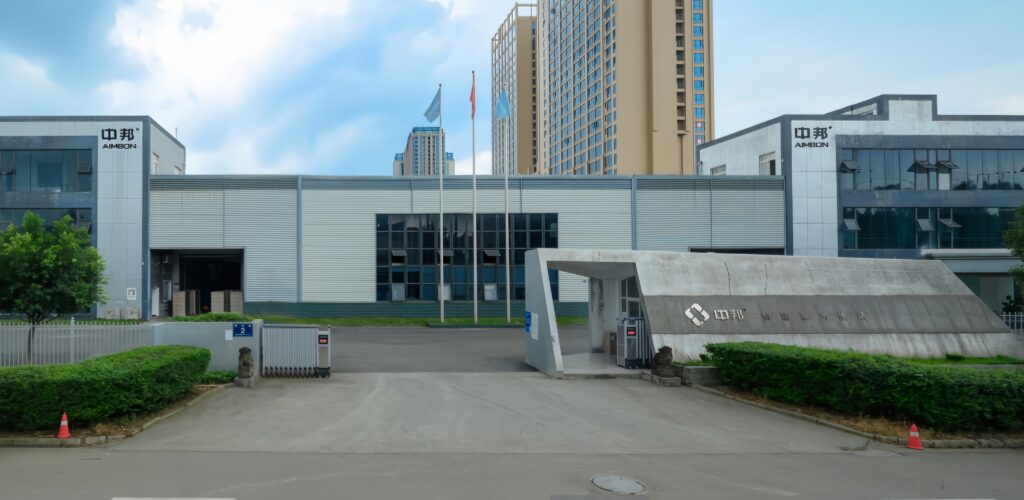
AIMBON has built air care hardware in Chengdu since 1997 — 29 years, 280+ patents, and 3 million units of annual capacity. Tooling, injection, assembly, and testing sit in one plant, with a CADR chamber, a semi-anechoic room, and environmental test cells under the same roof.
We work in both models: ODM on proven platforms and CDM for brands that need their own architecture. Our water-wash air purification technology is the reason most partners start a conversation with us rather than with a catalogue.
Not sure which model you need? We compare all three, including OEM, in OEM vs ODM vs CDM.
For platform-based projects, we quote 20–60 days from kickoff to mass production. For new tooling, we quote a milestone plan instead of a number.
FAQ
How long does it take to source an air purifier from China?
It depends on whether the tooling exists. A platform-based project moves faster because the mold, the certification sample, and the process are already proven. New tooling adds weeks that no supplier can compress by working harder. Ask for a milestone plan with an owner per stage instead of one delivery number.
Should the certificate be in my brand’s name?
For market access, yes — or at least it should explicitly cover your model. A certificate issued only to the factory does not automatically protect your listing. Confirm the applicant name and the certificate number before you order.
What is a reasonable MOQ for private-label air purifiers?
There is no industry number. MOQ follows tooling amortization and line setup. Ask each supplier to split it into “tooling cost per unit” and “minimum batch”, then compare the structure across quotes. That split tells you who is amortizing what.
Takeaway
The shortlist test is simple. Can the supplier show you a patent number, a raw test report, and the machine that molds your part — on the same call, without preparing?
If yes, you are talking to a manufacturer. If no, you are talking to a sales office, and the difference will show up in your first shipment.
If you are evaluating air care partners for 2026, send us your market, target price band, and volume estimate. We will reply with a platform recommendation and a milestone plan, not a catalogue.