
The first sign of disaster is often invisible—a sheen on the water, catching the sunlight in ways it shouldn’t. Then comes the smell. And then, the dying begins.
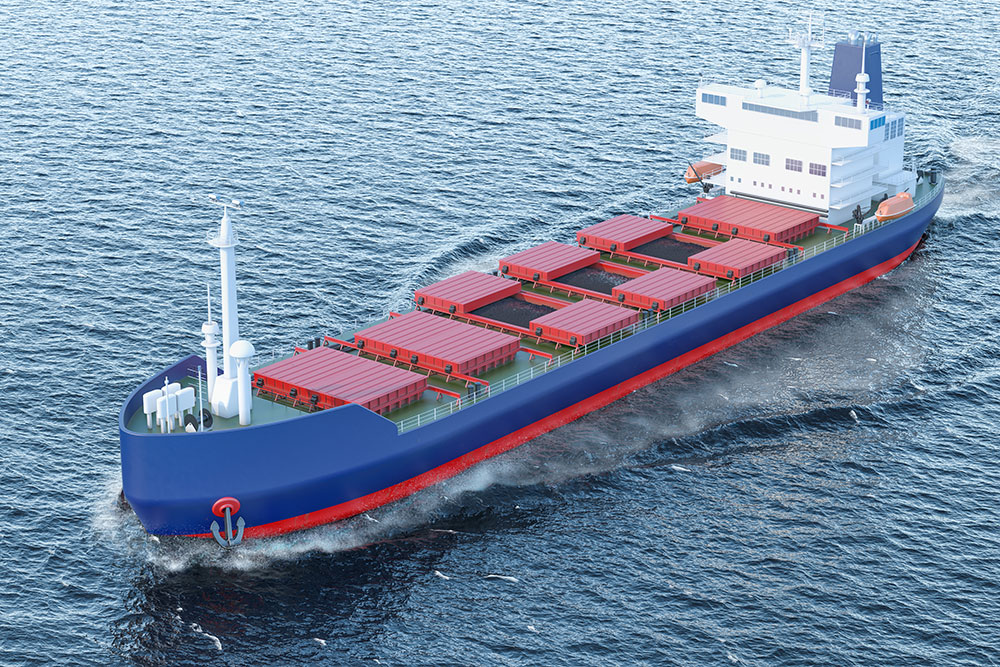
When a fully laden oil tanker is struck by a missile or drone in the narrow waters of the Strait of Hormuz, the world’s attention focuses on geopolitics, oil prices, and supply chains. But beneath the surface, another tragedy unfolds—silent, slow, and often irreversible. This is the story of what happens to the marine environment when a tanker burns.
The Strait: A Natural Trap
The Strait of Hormuz is not just a geopolitical chokepoint; it is an ecological one. At its narrowest, the waterway is just 21 nautical miles wide, with shipping lanes only two miles wide in each direction. Tankers requiring deep draft channels have limited room to maneuver—and when disaster strikes, the oil has nowhere to go.
The Persian Gulf is a semi-enclosed, shallow sea with limited water exchange. It takes several years for the Gulf’s waters to fully flush into the open ocean. This means that any major oil spill does not dissipate quickly. Instead, it circulates, concentrates, and settles, poisoning the ecosystem for decades. The region’s high temperatures and evaporation rates further concentrate pollutants, making the Gulf uniquely vulnerable to long-term contamination.
The Immediate Aftermath: A Toxic Tsunami
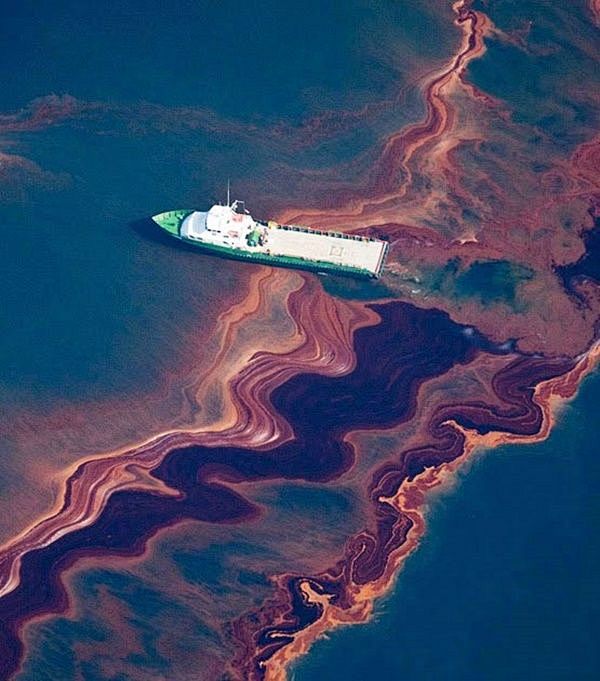
When a tanker is hit, the first few hours are critical. In recent incidents near the Strait, satellite imagery has revealed oil slicks stretching across thousands of hectares—plumes of crude spreading rapidly with wind and current.
A single Very Large Crude Carrier can hold up to two million barrels of oil. Even a partial release creates a catastrophic event. The oil spreads across the surface, forming a thin slick that blocks sunlight—the fundamental energy source for marine photosynthesis. Phytoplankton, the base of the ocean food web, begin to die within days.
But the surface slick is only the beginning. Weathering processes—evaporation, dispersion, emulsification—transform the oil. Lighter, more toxic compounds evaporate into the air, creating plumes of carcinogens that drift over coastal communities. Heavier components sink or form tar balls that wash ashore, coating beaches and rocks in toxic sludge.
The Chemistry of Poison
Crude oil is a complex mixture of thousands of chemical compounds. The most immediately toxic are the polycyclic aromatic hydrocarbons (PAHs). These compounds are highly toxic to marine life even at very low concentrations. They interfere with cellular function, damage DNA, and accumulate in the tissues of organisms.
When fish, shellfish, or other marine animals are exposed to PAHs, the effects can be catastrophic. In the minutes and hours after a spill, fish and shrimp may die in massive numbers. Those that survive often suffer from reduced growth, reproductive failure, and increased susceptibility to disease.
The Assault on Marine Life
The Gulf of Oman and the Persian Gulf are home to diverse marine ecosystems—coral reefs, mangroves, seagrass beds, and rich fisheries that have sustained coastal communities for millennia. A major oil spill assaults each of these habitats in different ways.
Coral Reefs: The Rainforests of the Sea
The Persian Gulf’s coral reefs are among the most resilient in the world, having adapted to extreme temperatures and salinity. But oil is their breaking point. When oil slicks pass over reefs, the chemical compounds poison coral polyps, causing bleaching and death. Physical smothering by oil-coated particles blocks the light corals need to survive. Recovery takes decades—if it happens at all.
The loss of coral reefs triggers a cascade of destruction. Reefs provide shelter and nursery grounds for countless fish species. When the reef dies, the fish disappear. When the fish disappear, the fishermen lose their livelihoods.
Mangroves: The Coastline Defenders
Along the Gulf’s shores, mangroves stand as the first line of defense against erosion and storm surges. Their complex root systems provide critical habitat for juvenile fish, crabs, and shrimp. But mangroves are acutely sensitive to oil. When oil coats their breathing roots, the trees suffocate. The heavy, persistent nature of crude means that once oil penetrates a mangrove forest, it can remain toxic for decades.
Marine Mammals and Sea Turtles
The Gulf is home to dugongs, dolphins, and several species of sea turtles—all vulnerable to oil spills. Marine mammals that surface to breathe can inhale toxic fumes or ingest oil when grooming. Sea turtles, which must surface to breathe, are particularly susceptible to oiling. Oil can cause skin irritation, blindness, and damage to internal organs. Eggs laid on oiled beaches may never hatch.
The Deeper Threat: Sinking and Grounding
Perhaps the greatest long-term threat comes not from the oil that floats, but from what happens when a damaged tanker sinks or runs aground.
In the Red Sea, a bulk carrier carrying more than 41,000 tons of fertilizer was attacked and subsequently sank, resulting in spillage into the sea. The combination of oil and fertilizer creates a deadly synergy—nutrient overload that can trigger massive algal blooms, leading to oxygen-depleted dead zones where nothing can survive.
When a tanker sinks in deep water, the oil may be trapped in the wreck, slowly leaking over decades. The wreck itself becomes a toxic time bomb, corroding and releasing its cargo bit by bit. Salvage operations in a conflict zone are nearly impossible—the ship remains where it fell, poisoning the water year after year.
The Food Chain Contamination
Oil spills do not just kill visibly; they contaminate invisibly. The smallest organisms—plankton, larvae, filter feeders—absorb toxins directly from the water. These organisms are eaten by small fish, which are eaten by larger fish, which are caught and eaten by humans.
Bioaccumulation means that toxins concentrate as they move up the food chain. Predatory fish—tuna, kingfish, sharks—can accumulate dangerous levels of PAHs and heavy metals in their tissues. For coastal communities that depend on seafood as their primary protein source, this contamination is a direct threat to health.
Fishermen watch their catch dwindle, then watch the fish that remain become too toxic to sell. The economic destruction compounds the ecological.
The Long Shadow: What Remains
Years after a major spill, the oil does not disappear. It settles into sediments, where it can be resuspended by storms or dredging, re-entering the water column and starting the cycle of poisoning all over again.
Heavy metals from crude oil—nickel, vanadium, lead—accumulate in the seabed. These do not degrade; they persist indefinitely. Organisms that live in or feed from the sediment—worms, crabs, bottom-feeding fish—continue to be exposed for generations.
The 1991 Gulf War oil spills, which released an estimated 6 to 8 million barrels of crude, left oil lakes that still contaminate the region’s shorelines more than three decades later. Recovery is measured not in years, but in decades—if it comes at all.
Air Pollution: The Other Victim
When a tanker burns, the environmental destruction is not confined to the water. The plumes of black smoke from burning crude contain particulate matter, sulfur dioxide, nitrogen oxides, and a cocktail of toxic organic compounds. These plumes drift over populated areas, causing immediate respiratory distress and contributing to long-term health crises.
Coastal residents from the UAE to Iran have reported smelling burning oil from recent incidents. For those with asthma or heart conditions, these episodes can be life-threatening. Children, the elderly, and the vulnerable pay the price for a conflict not of their making.
The Unseen Cost
There is no insurance policy for a dead coral reef. No compensation fund can restore a collapsed fishery. No diplomatic agreement can bring back a species pushed to the edge of extinction.
The Strait of Hormuz is one of the most strategically important waterways on Earth. But it is also a living system—fragile, interconnected, and irreplaceable. When a tanker burns, the fire is visible for miles. But the true devastation is invisible: the slow death of the sea, one organism, one generation, one species at a time.
As tensions rise and tankers continue to sail through dangerous waters, the environment waits—a silent combatant that always loses. The oil that spills today will poison the Gulf for decades. The children born this year will inherit seas their grandparents once knew, transformed into something toxic and strange.
In the end, the Strait of Hormuz is not just a passage for oil. It is a living ocean. And when we poison it, we poison ourselves.