
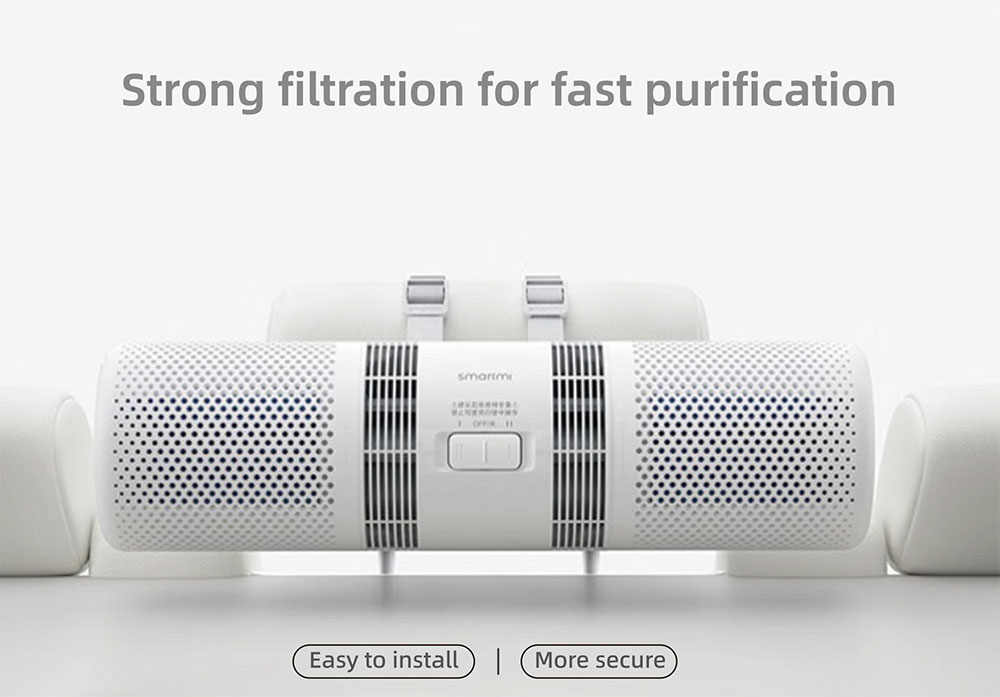
As the pulse of the city is defined by endless streams of traffic, we enjoy the convenience of mobility while collectively driving into a “low-altitude pollution cloud” composed of vehicle exhaust. Traffic congestion has become the norm in metropolises, and every idling moment, every acceleration, releases massive amounts of pollutants into the air. For drivers and passengers, a fact often gravely overlooked is: your car cabin is not an isolated fortress; on the contrary, it may be enveloping you in a high-concentration exposure chamber to exhaust fumes. In this context, a car air purifier has transitioned from an “additional feature” to an important active protection device concerning driving health and safety.
Act I: The Invisible Siege – Understanding the Compound Hazards of Urban Exhaust Pollution
Vehicle exhaust is by no means a single substance; it is a complex, highly harmful chemical cocktail. Its main hazardous components include:
Fine Particulate Matter (PM2.5/PM1.0/PM0.1): Exhaust, especially from diesel vehicles, is a major source of urban PM2.5. These particles are small enough to penetrate lung alveoli and directly enter the bloodstream, triggering systemic inflammatory responses. They are a prime culprit in cardiovascular diseases, respiratory illnesses, and even impaired cognitive function. Even smaller PM0.1 (ultrafine particles) have greater penetrating power.
Nitrogen Oxides (NOx): Including nitric oxide and nitrogen dioxide. They are precursors to ground-level ozone and secondary particulate matter (nitrate), and themselves strongly irritate the respiratory tract, impair lung function, and exacerbate asthma and chronic bronchitis.
Volatile Organic Compounds (VOCs) and Benzene Series: Come from incompletely burned fuel. Many of these are potent carcinogens, and long-term exposure increases the risk of blood diseases like leukemia.
Carbon Monoxide (CO): A colorless, odorless “silent killer” that binds with hemoglobin in the blood, reducing its oxygen-carrying capacity, leading to headaches and drowsiness. Accumulation is particularly dangerous in enclosed or poorly ventilated cabins.
The concentration of these pollutants is extremely high on traffic-dense roads and in tunnels. Even with windows closed, they can continuously seep into the vehicle through the external air circulation system, door seals, and window gaps. In congested areas, the air outside your car is itself a high-concentration pollution source.
Act II: The Double Trap Inside the Cabin – External Infiltration and Internal Generation
Beyond the pervasive external exhaust, the cabin itself is a unique pollution microenvironment, creating a “double whammy”:
External Pollution Infiltration: The air intake for a car’s HVAC system is typically located near the engine bay or below the windshield—the “perfect spot” to collect exhaust from vehicles ahead. The standard cabin air filter (especially inefficient basic ones) offers very limited filtration against PM2.5 and harmful gases, effectively pumping external polluted air “as-is” into the cabin.
Internal Pollution Release: New car interiors (leather, plastics, adhesives) continuously off-gas formaldehyde, benzene, and other VOCs, creating the “new car smell.” Simultaneously, dust, dander, microbes from occupant activity, along with food residues, tobacco smells (even thirdhand smoke), and other odors accumulate in the enclosed space.
Therefore, in-car air quality is often a superimposition of external traffic pollution and internal microenvironment pollution. Its pollution peaks can far exceed those of general indoor environments, posing a continuous, chronic health threat to long-distance commuters, professional drivers, children, and pregnant women who spend significant time in vehicles.
Act III: The Mobile Oasis – The Core Value of a Car Air Purifier
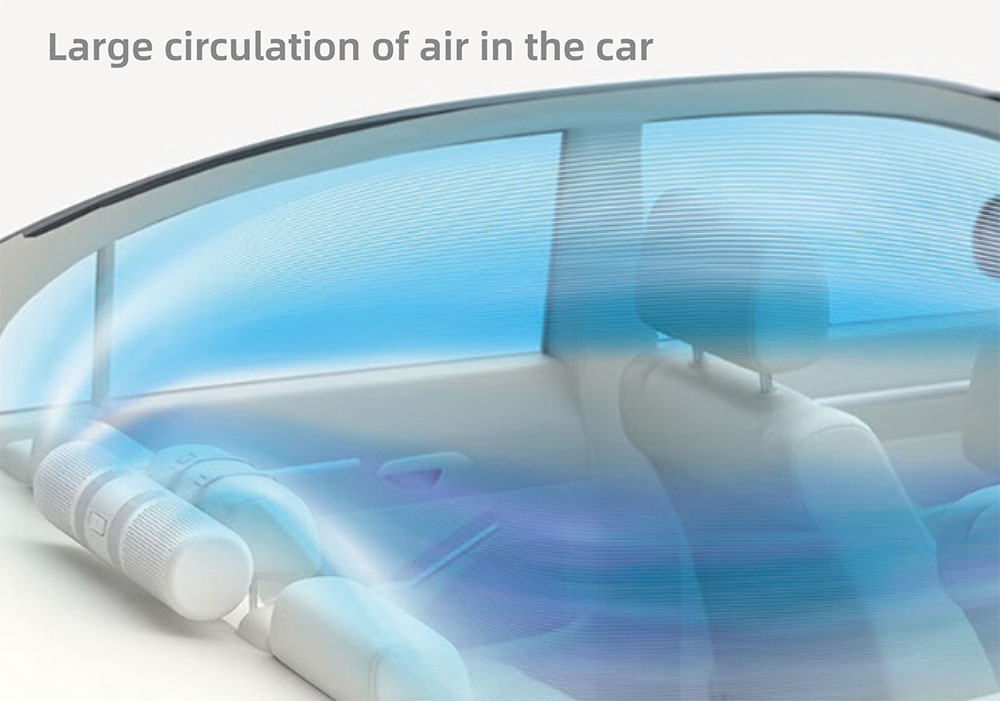
Faced with this dynamic, dual-source pollution challenge, the car air purifier was created. Its core mission is to establish a continuously circulating “clean air core zone” within the moving cabin.
An efficient car air purifier works by:
Rapid Purification for Dynamic Pollution: A device with a high CADR (Clean Air Delivery Rate) can quickly circulate the limited air within the cabin, significantly reducing spiking particle concentrations within minutes when suddenly entering a tunnel or congested area.
Multi-Layer Filtration for Targeted Strikes:
True HEPA Filter: Physically intercepts over 99% of particles like PM2.5, pollen, and dust.
High-Quality Activated Carbon Filter: Adsorbs and locks away sulfur dioxide, nitrogen oxide odors from exhaust, as well as gaseous molecules and odors like formaldehyde, benzene, and VOCs from inside the car.
Additional Technologies: Some high-end products feature negative ion generators to help settle micro-dust or UV-C lamps to aid in disinfecting bacteria and viruses on the filter surface.
Compensating for the Stock HVAC’s Shortcomings: It acts as a powerful supplement or even replacement for the stock cabin air filter system, providing purification efficiency far exceeding original equipment standards. The improvement is especially noticeable for older vehicles or models with generally poor-performing cabin filters.
Its value goes far beyond being an accessory:
Protects Occupant Health: Provides an active respiratory barrier for family members, especially children and the elderly with fragile respiratory systems, during journeys.
Enhances Driving Safety: Reduces driver fatigue, drowsiness, and attention decline caused by carbon monoxide buildup or stale air, promoting more alert driving.
Improves the Driving Experience: Eliminates stale air, food odors, smoke smells, and the “new car smell” from the cabin, making every trip accompanied by freshness and comfort.
Act IV: How to Choose Your ‘In-Car Health Guardian’
When choosing from available products, focus on:
Purification Efficacy (CADR): Select a product with a CADR value high enough to match your cabin’s volume, ensuring purification speed can keep up with pollution intrusion.
Filter Configuration: A true HEPA filter paired with sufficient activated carbon is the foundation for effectively tackling the composite pollution of urban exhaust. Check the weight and filling amount of activated carbon, as this directly relates to its ability and lifespan in removing odors and gaseous pollutants.
Installation & Power Method: Choose a product that installs securely (e.g., using a bracket), doesn’t compromise driving safety, and has stable power supply (e.g., using the 12V socket).
Noise Level: It should be powerful at the highest setting, yet quiet enough at lower speeds or in sleep mode not to interfere with conversation or rest in the car.
Conclusion: Redefining Travel, Starting with Breath
In an era where urban air poses a public health challenge, we cannot instantly change the entire macro-environment, but we can act immediately to protect the private spaces we and our families most frequently occupy—including that mobile “home.” Investing in a professional car air purifier is a simple, direct, yet profoundly meaningful health decision.
It means that whether outside your car is a congested line of traffic or a polluted tunnel, the air flowing inside your cabin is always purified and fresh. This is not merely a consumption for improved quality of life; it is essential equipment for carving out a safe, healthy, and alert mobile path through the siege of exhaust fumes.