
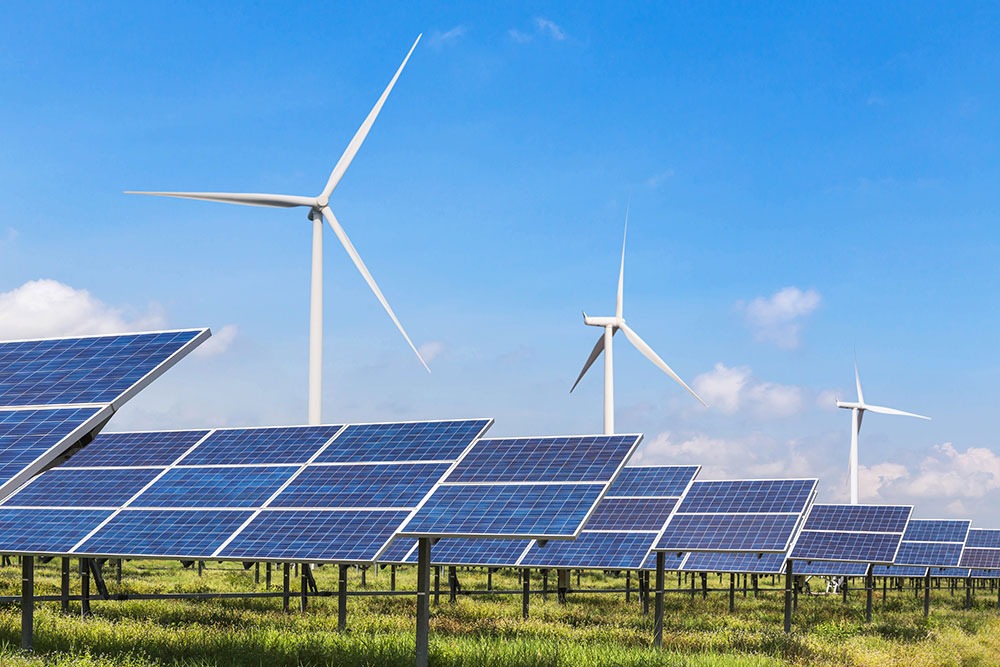
Energy is the cornerstone of modern society. For a long time, fossil fuels such as coal, oil, and natural gas have supported economic growth since the Industrial Revolution. However, the environmental costs and health damages they incur are increasingly becoming burdens too heavy for humanity to bear. Clean energy sources—including solar, wind, hydro, biomass, and geothermal—are becoming the core direction of the energy transition due to their environmental friendliness and sustainability. This article will systematically elaborate on the significant advantages of clean energy over traditional fossil fuels from the two dimensions of environmental governance and air health.
I. The Essential Difference Between Clean Energy and Fossil Fuels
Fossil fuels are hydrocarbons formed from ancient biological remains over millions of years through geological processes. The process of utilizing them essentially involves rapidly releasing carbon stored underground into the atmosphere in the form of carbon dioxide and other compounds, accompanied by the emission of various pollutants. Clean energy, on the other hand, mainly comes from renewable natural processes. During utilization, it produces almost no pollutants or greenhouse gases, and the resources are inexhaustible.
II. Comprehensive Advantages in Environmental Governance
1. Addressing Climate Change: Greenhouse Gas Emission Reduction
Fossil fuel combustion is the largest source of anthropogenic greenhouse gas emissions, accounting for about 75% of global carbon dioxide emissions. The widespread use of coal, oil, and natural gas in power generation, transportation, and industry has pushed atmospheric CO₂ concentrations from 280 ppm before the Industrial Revolution to over 420 ppm today. The resulting global warming has led to frequent extreme weather events, rising sea levels, and ecosystem degradation.
Clean energy emits almost no greenhouse gases during the operational phase. Taking solar photovoltaics as an example, its lifecycle emissions (including manufacturing, installation, and decommissioning) are only one-tenth to one-twentieth that of fossil fuels. Data from the International Energy Agency shows that renewable electricity generation globally avoided approximately 1.5 billion tonnes of CO₂ emissions in 2023. If the global energy structure accelerates its transition to clean energy, achieving net-zero emissions by mid-century and limiting temperature rise to within 1.5°C becomes possible.
2. Eliminating the Threat of Acid Rain: Reducing Sulfur Dioxide and Nitrogen Oxides
Coal and oil contain sulfur and nitrogen. The sulfur dioxide and nitrogen oxides produced upon combustion are the main precursors of acid rain. Acid rain acidifies soil, kills forests, destroys aquatic life in lakes, and corrodes buildings. During the peak of China’s acid rain pollution in the 2010s, approximately 30% of the country’s land area was affected by acid rain.
Clean energy sources emit absolutely no sulfur dioxide or nitrogen oxides. Replacing coal-fired power with wind and solar energy can fundamentally eliminate the source of acid rain pollution. Experience in Europe shows that as the share of renewable energy increases, the acid rain problem has significantly eased, and forest and lake ecosystems are gradually recovering.
3. Protecting Water Resources: Reducing Water Pollution and Consumption
Fossil fuel extraction and utilization place immense pressure on water resources. Coal mining leads to the destruction of groundwater systems and the discharge of acidic mine wastewater. Oil and gas extraction can contaminate groundwater aquifers. Thermal power plants require large amounts of cooling water, exacerbating water scarcity. Additionally, the nitrogen oxides and sulfur compounds from fossil fuel combustion form acid rain, further polluting surface and groundwater.
Among clean energy sources, solar PV and wind power consume almost no water and produce no water pollutants. While hydropower involves reservoir construction, its operation phase emits no pollutants, and ecological impacts can be minimized through careful planning. Over their entire lifecycle, clean energy sources consume only one-hundredth to one-thousandth of the water used by fossil fuels.
4. Reducing Solid Waste and Land Degradation
Coal mining generates vast quantities of gangue, which not only occupies land but can also spontaneously combust, releasing harmful gases. Fly ash and slag from coal-fired power plants contain heavy metals and radioactive substances; improper disposal contaminates soil and groundwater. The petrochemical industry produces large amounts of hazardous waste.
After clean energy facilities are decommissioned, wind turbines and solar panels can be recycled, enabling resource circulation and avoiding long-term environmental hazards. The main materials in solar panels (glass, aluminum, silicon) can achieve recovery rates exceeding 90%, and recycling technology for wind turbine blades is rapidly advancing. Properly planned solar and wind farms can also be compatible with agriculture and animal husbandry, enabling comprehensive land use.
5. Protecting Biodiversity and Ecosystems
The entire lifecycle of fossil fuels—from exploration, extraction, and transportation to combustion—poses multiple threats to ecosystems. Oil spills cause marine ecological disasters, coal mining destroys surface vegetation, oil and gas pipelines traverse sensitive habitats, and climate change itself is forcing species migration and extinction.
Clean energy has a relatively minor direct impact on ecosystems, and appropriate siting and planning can further mitigate effects. For example, building solar farms in barren areas like deserts and gobi lands can even improve local microclimates through shading effects, promoting vegetation restoration. The foundations of offshore wind farms can function as artificial reefs, benefiting marine life.
III. Revolutionary Progress in Air Health
1. Eliminating Major Air Pollutants
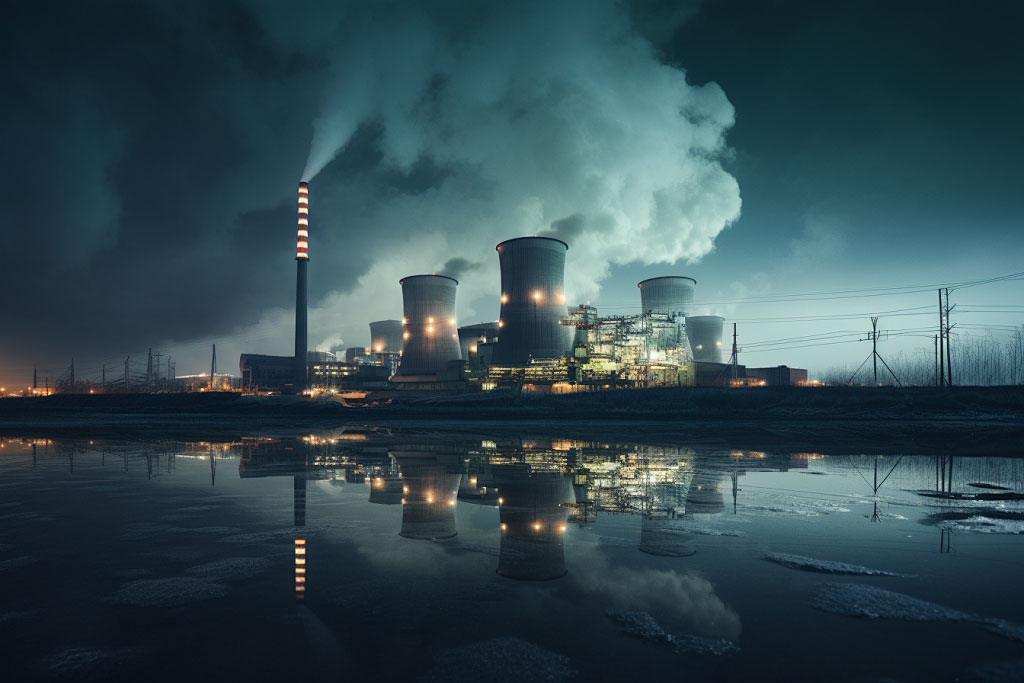
The list of pollutants released by burning fossil fuels is alarming:
• Fine Particulate Matter (PM2.5): Directly emitted and secondarily formed PM2.5 is the number one killer threatening public health. Globally, about 4 million people die annually from diseases related to PM2.5 exposure.
• Sulfur Dioxide (SO₂): Irritates the respiratory tract, inducing asthma and bronchitis.
• Nitrogen Oxides (NOₓ): Damage lung function and promote the formation of ozone and secondary particulate matter.
• Volatile Organic Compounds (VOCs): Some are carcinogenic and also act as ozone precursors.
• Heavy Metals (Mercury, Lead, etc.): Neurotoxins that can bioaccumulate in the food chain.
Clean energy sources produce none of these pollutants during operation. An electric vehicle emits zero tailpipe emissions while driving, whereas a gasoline car emits PM2.5, NOₓ, and VOCs per kilometer, placing continuous pressure on urban air quality. One wind farm replacing a coal-fired power plant of equivalent generation capacity can reduce SO₂ by hundreds of tonnes, NOₓ by hundreds of tonnes, and PM2.5 by dozens of tonnes annually.
2. Curbing Smog at Its Source
The core cause of frequent winter smog in northern Chinese cities is the massive emissions of particulate matter and gaseous precursors from coal-fired heating and industrial production. Replacing bulk coal with clean heating methods (such as heat pumps, electric heating, biomass pellets) can reduce regional PM2.5 concentrations by over 30%. During the 2022 Beijing Winter Olympics, the temporary shutdown of surrounding coal-fired facilities resulted in historically good air quality, vividly demonstrating the immediate effect of clean energy on smog control.
3. Reducing Indoor Air Pollution
Approximately 2.5 billion people globally still rely on solid fuels (wood, animal dung, coal) for cooking and heating using open fires or traditional stoves, leading to severe indoor air pollution. The World Health Organization estimates that about 3.8 million people die prematurely each year due to indoor air pollution, the vast majority being women and children in developing countries.
Replacing solid fuels with clean energy (electricity, biogas, solar, etc.) can completely eliminate indoor smoke exposure, leading to lower respiratory infection rates in children, improved health for pregnant women, and enhanced quality of life for residents. Distributed solar PV and household biogas are transforming the energy structure of countless families in developing nations.
4. The Economic Value of Health Benefits
The health losses caused by air pollution are enormous. The World Bank estimates that global lost labor income and healthcare expenditures due to air pollution total up to $5.7 trillion annually. Through recent air pollution prevention and control actions, China has reduced its PM2.5 concentrations by over 50% cumulatively, increasing the average life expectancy of its residents by approximately 2 years.
The health benefits of transitioning to clean energy far outweigh the transition costs. The International Renewable Energy Agency (IRENA) analyzes that by 2050, improved air quality resulting from the energy transition could avoid approximately 3 million premature deaths annually, with cumulative health benefits amounting to tens of trillions of dollars.
IV. Challenges and Outlook
Of course, promoting clean energy also faces certain challenges: intermittency (solar and wind are weather-dependent), energy storage costs, land use, and critical mineral supply. However, these challenges are being progressively overcome through technological innovation and policy support. Energy storage costs have fallen by nearly 90% over the past decade, smart grids and demand-side response technologies are maturing, and circular economy principles are promoting the recycling of critical materials.
In contrast, the environmental and health costs of fossil fuels are long-term, lagged, and irreversible, while the advantages of clean energy are sustainable and cumulative. The International Energy Agency points out that solar and wind power have become the cheapest source of electricity in most parts of the world; the economic viability of clean energy has already surpassed that of fossil fuels.
V. Conclusion
From the black of coal to the gold of the sun, from the viscosity of oil to the lightness of wind—the energy transition is not merely a technological change but a fundamental shift in the philosophy of human development. The advantages of clean energy in environmental governance and air health are comprehensive and profound: it addresses immediate issues like smog and acid rain while tackling the long-term challenge of climate change; it protects the macro-ecosystem while safeguarding the respiratory health of every individual.
With every rotation of a wind turbine and every glint of sunlight on a solar panel, a burden of pollution is lifted from the Earth and a measure of health is added for humanity. When we choose clean energy, we are choosing not just a form of energy, but a respect for life and a commitment to the future. In this energy revolution that will determine the fate of our planet, clean energy is not merely the better choice—it is the only sustainable one.