
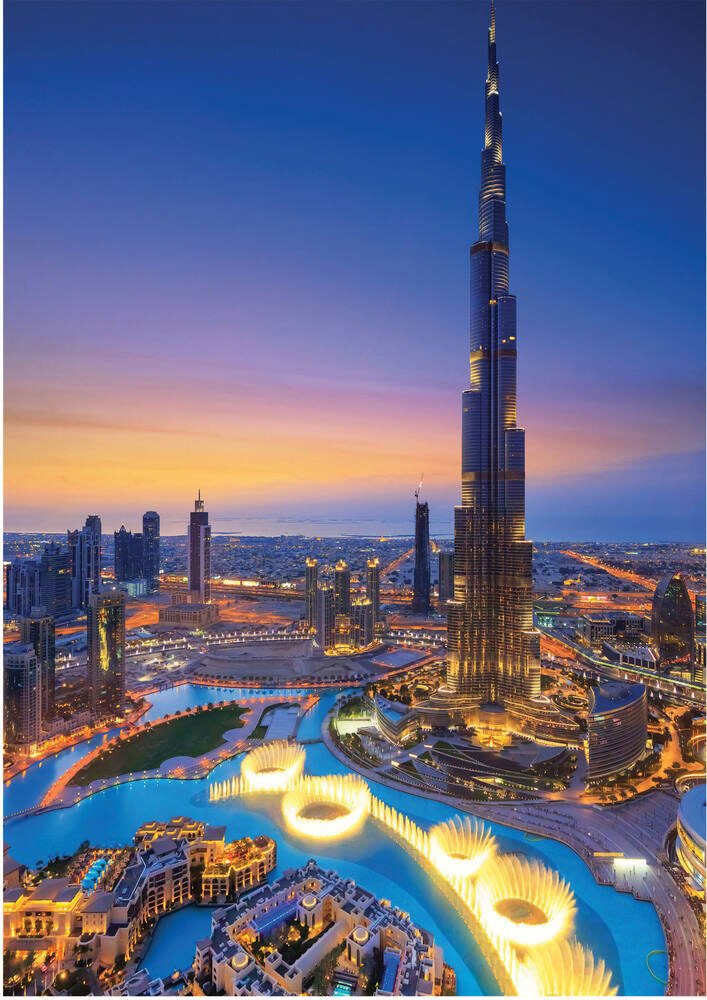
The gleaming skyline of Dubai often disappears behind a beige veil—not of fog, but of dust. Across the emirate, air quality frequently deteriorates to levels classified as “Unhealthy” or worse, creating a hidden health crisis for millions of residents and visitors.
The Current Reality: Alarming Numbers
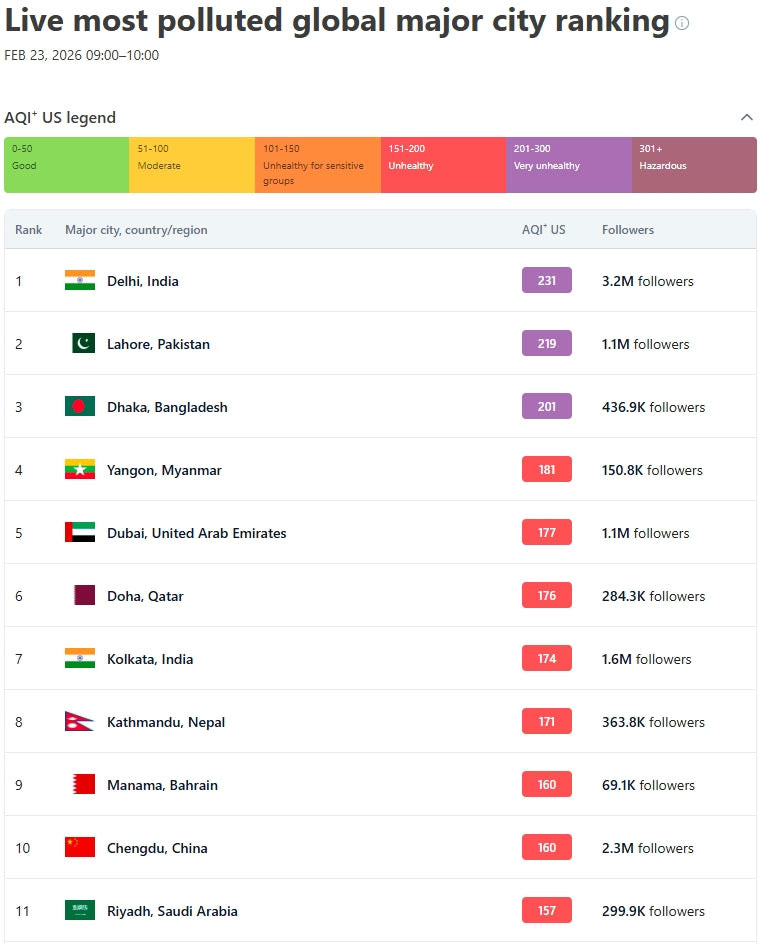
As of February 2025, air quality monitoring stations across Dubai are recording concerning data. At one major monitoring location, the Air Quality Index (AQI) reached 190, classified as “Very Unhealthy” [citation:4]. This means health effects can be immediately felt by sensitive groups, while healthy individuals may experience difficulty breathing and throat irritation with prolonged exposure [citation:4].
The primary culprit? Fine particulate matter known as PM2.5—microscopic particles that penetrate deep into the lungs and enter the bloodstream. Current PM2.5 concentrations in parts of Dubai are averaging 55 µg/m³, which is 11 times higher than the World Health Organization’s annual safety guideline [citation:3]. Even on “moderate” days, PM2.5 levels often exceed WHO limits by 5-6 times [citation:1].
PM10: The Visible Threat
Larger particulate matter (PM10)—the kind you can see as dust in the air—is equally problematic. Readings have reached 164 µg/m³, levels considered “Very Unhealthy” that can cause eye and throat irritation, coughing, and aggravated asthma [citation:4].
Why Is Dubai’s Air So Polluted?
Dubai’s air pollution stems from a potent combination of natural geography and human activity.
1. Regional Sandstorms: Nature’s Contribution
Located on the edge of the Arabian Desert, Dubai is naturally prone to frequent sandstorms. Seasonal winds sweep across vast arid landscapes, lifting fine dust particles high into the atmosphere. These storms can blanket the city in dust for days, sending PM10 and PM2.5 concentrations soaring [citation:3][citation:4]. Unlike the common perception that sandstorms are just a nuisance, the fine dust they carry contains silica and other minerals that can damage lung tissue over time.
2. Urban Emissions: The Human Factor
While sand provides the baseline, human activity pushes Dubai’s air into hazardous territory. The city’s rapid growth has brought:
Vehicle exhaust from millions of cars contributes nitrogen dioxide (NO₂), which recently registered at “Poor” levels of 33 µg/m³ [citation:4]. Industrial activity, construction dust, and power generation from fossil fuels add to the cocktail of pollutants. These emissions interact with natural dust particles, creating a complex and harmful airborne mixture [citation:3].
Health Impacts: What’s at Stake?
The health consequences of breathing Dubai’s air are not theoretical—they are immediate and measurable.
At current pollution levels, even healthy individuals may experience [citation:2][citation:4]:
• Difficulty breathing and throat irritation
• Coughing and chest tightness
• Eye irritation and fatigue
For sensitive groups—children, the elderly, and those with respiratory or heart conditions—the effects are more severe. These individuals face aggravated asthma, increased risk of respiratory infections, and reduced lung function. Long-term exposure to elevated PM2.5 is linked to cardiovascular disease, lung cancer, and chronic respiratory illnesses [citation:2].
WHO Guidelines vs. Dubai Reality
The World Health Organization recommends annual PM2.5 exposure below 5 µg/m³. In Dubai, current levels range from 29 µg/m³ on “moderate” days [citation:1] to 55 µg/m³ or higher during pollution episodes [citation:3]. This means residents are breathing air with 5 to 11 times the recommended maximum of fine particulate pollution.
What Can Residents and Visitors Do?
While improving Dubai’s overall air quality requires long-term policy changes, individuals can take immediate steps to protect themselves.
Monitor Daily Air Quality
Check real-time AQI readings before planning outdoor activities. Multiple monitoring stations across Dubai provide hourly updates [citation:1][citation:5]. When AQI exceeds 100 (Unhealthy for Sensitive Groups), take precautions.
Create a Clean Indoor Environment
Since people spend approximately 90% of their time indoors, ensuring good indoor air quality is essential [citation:1]:
• Keep windows closed during high-pollution days and sandstorms [citation:1][citation:5]
• Use a high-quality air purifier with HEPA and activated carbon filtration to remove both particles and gaseous pollutants [citation:1][citation:5]
• Consider wearing an N95 or equivalent mask when outdoor exposure is unavoidable during severe pollution events [citation:1]
Reduce Personal Contribution
Opt for public transportation, reduce idling, and support policies that transition energy sources away from fossil fuels. Individual actions, multiplied across millions of residents, can help reduce the “human” portion of Dubai’s pollution burden.
The Path Forward
Dubai’s leadership has acknowledged the challenge. The UAE’s “Year of Sustainability” and preparations for COP28 have brought renewed attention to environmental issues. However, addressing air pollution requires sustained effort: stricter emissions standards, expanded public transit, increased renewable energy, and regional cooperation to tackle dust storms.
For now, the reality is clear: Dubai’s air frequently carries a hidden danger. Understanding the risks and taking protective measures isn’t alarmism—it’s common sense in a city where the desert meets the modern world.
Because the air you breathe today shapes your health for years to come.