
1. The Physiological Impact of Air Pollutants on Recovering Patients
Patients undergoing medical treatment or post-operative recovery possess compromised physiological defenses. When exposed to ambient or indoor air pollutants, their biological systems react with heightened vulnerability across multiple clinical vectors:
- Systemic Inflammation & Microvascular Stress: Ultrafine particles (PM0.1 to PM2.5) penetrate deep into alveoli and enter the bloodstream, triggering systemic inflammation, elevated blood pressure, and increased cardiac workload in cardiovascular patients.
- Respiratory Mucosal Degradation: Dry indoor air combined with suspended airborne irritants paralyzes airway cilia, inhibiting the natural clearance of mucus and opening pathways for viral or bacterial chest infections.
- Impaired Tissue Oxygenation & Delayed Wound Healing: Inhaled gaseous pollutants and elevated indoor carbon dioxide (CO₂) reduce blood oxygen saturation, impairing cellular regeneration and prolonging wound healing timelines.
2. High-Risk Clinical Environments Requiring Advanced Air Care
Airborne pollution is rarely limited to outdoor smog; indoor clinical environments present unique chemical and bio-aerosol concentrations that jeopardize patient health:
- Post-Partum & Maternal Care Centers (月子中心): Newborn infants and recovering mothers require sterile, precisely humidified air to prevent neonatal respiratory distress and maternal sleep disruption.
- Post-Surgical Recovery Suites: Surgical incisions remain highly susceptible to airborne bio-aerosols, dust mites, and fungal spores carried through unscrubbed ventilation ducts.
- Geriatric & Long-Term Care Wards: Elderly patients with chronic obstructive pulmonary disease (COPD) or asthma suffer acute exacerbations when exposed to fluctuating humidity levels and airborne particulates.

3. The Clinical Limit of Conventional HEPA Filtration
While traditional dry HEPA air purifiers are widely deployed in commercial facilities, they present distinct operational limitations within medical and clinical recovery settings:
Dry fiber filters trap micro-aerosols and organic matter on static media surfaces. In the presence of ambient humidity fluctuations, trapped organic particles can serve as breeding grounds for secondary mold and bacteria. Furthermore, as HEPA filters become saturated, airflow resistance increases motor fan noise—often exceeding 45–50 dB—which directly degrades patient sleep quality and elevates nighttime cortisol levels.
4. Clinical Air Care Technology Assessment Matrix
Compare how different environmental hardware architectures address critical patient care and facility procurement parameters:
| Clinical Parameter | Central Building HVAC | Standard Dry HEPA Purifiers | AIMBON Medical Hydro-Scrubbing |
|---|---|---|---|
| Pathogen & Dust Capture | Basic MERV filtration; high duct accumulation. | High particulate capture; risk of secondary mold. | Filter-Free liquid encapsulation & flushing. |
| Airway Hydration (RH %) | Dries out indoor air during heating/cooling. | No moisture regulation; exacerbates throat dryness. | Natural hydro-balancing (45%–55% RH target). |
| Sleep Acoustic Impact | Variable duct rumble. | Noise increases as filter clogs over time. | Sustained Sub-30dB whisper-quiet operation. |
| Biosecurity & Maintenance | Complex seasonal duct cleaning required. | Frequent costly filter changes ($80–$150/yr). | Thermal pasteurization + $0 zero consumables. |
5. The AIMBON Medical Solution: Filter-Free Aqua-Scrubbing Technology
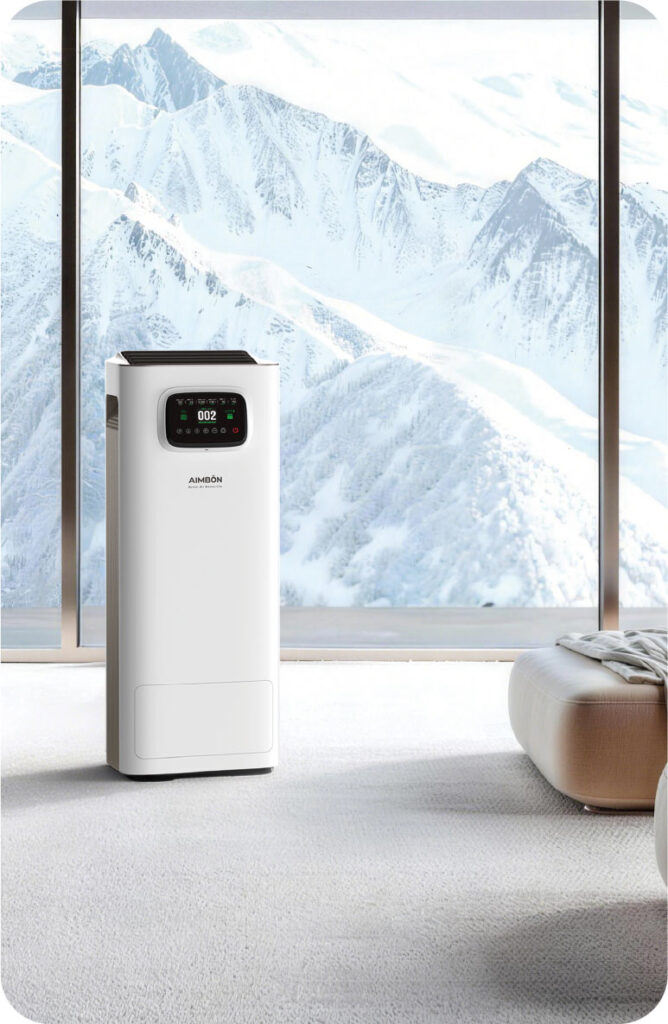
To eliminate the operational bottlenecks of dry filtration in clinical environments, AIMBON has engineered a proprietary water-wash hydro-purification platform. Designed specifically for health-critical applications, AIMBON systems utilize a dynamic high-velocity liquid curtain to wash ambient air, trapping sub-micron particulates, viruses, and chemical odors directly into a self-contained water reservoir.
By combining physical liquid encapsulation with continuous thermal pasteurization and micro-evaporative humidity control (45%–55% RH), AIMBON’s M-Series and clinical hardware lines maintain optimal biological air quality without disposable fiberglass filters, high fan noise, or secondary pollution risks.
Healthcare real estate developers, clinical procurement officers, and medical facility managers can deploy AIMBON pre-certified compliance platforms (CE, CB, KC, FCC) to safeguard patient wellness while reducing building operational costs.