
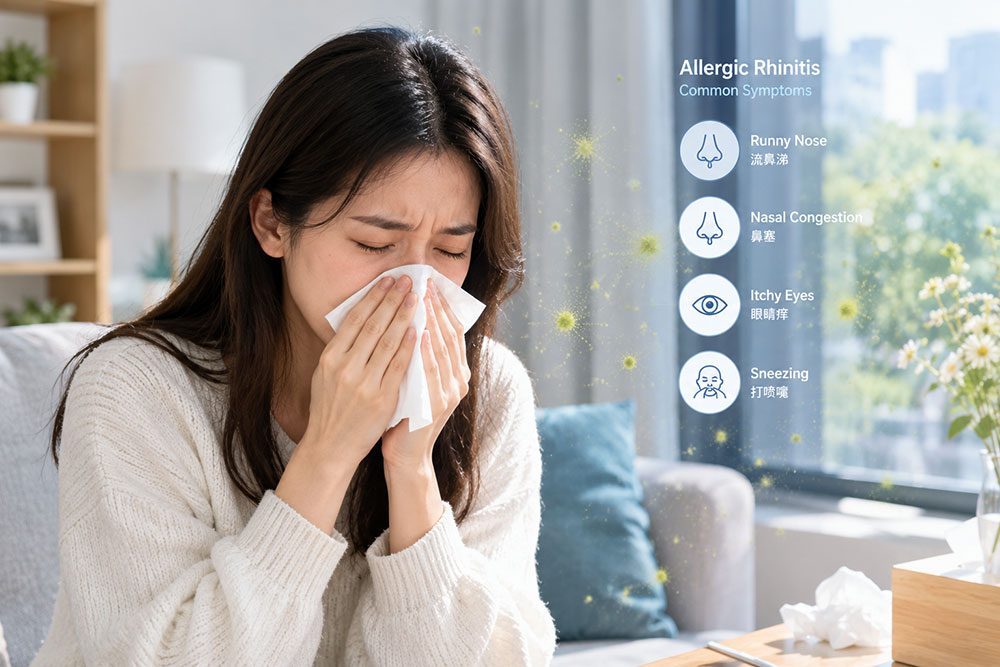
1. The Autumn Allergen Profile: Understanding Seasonal Triggers
Unlike spring allergies, which are largely driven by tree pollen, autumn introduces a distinct set of environmental bio-aerosols that penetrate indoor living and working spaces:
- Ragweed & Late-Blooming Pollen: A single ragweed plant can release over one billion pollen grains per season. These microscopic particles travel hundreds of miles on autumn breezes and easily settle onto clothing, carpets, and ductwork.
- Fungal Mold Spores: Falling leaves and damp autumn soil create ideal breeding conditions for outdoor molds such as Alternaria and Cladosporium. Spores drift indoors through open doors and HVAC intake vents.
- Central Heating Dust Mite Surge: Activating home heating systems for the first time in autumn blows accumulated dust mites, pet dander, and insect debris directly into living quarters.
2. The Dry Air Vulnerability: Why Mucosa Defense Matters
A critical yet frequently overlooked factor in autumn allergic rhinitis is indoor relative humidity (RH). When indoor heating engages, room humidity often plummets below 35% RH.
Dry indoor air impairs cilia—the microscopic hair-like structures lining the human respiratory tract responsible for trapping and expelling foreign particles. When nasal passages become dry and inflamed, even small concentrations of airborne pollen or dust trigger severe histamine reactions, leading to chronic coughing, throat irritation, and sinus congestion.
3. Limitations of Conventional HEPA Purifiers in Fall
While traditional dry HEPA air purifiers filter solid particles, they exhibit key operational shortfalls during autumn usage:
- Zero Airway Hydration: Standard HEPA units continuously push dry air across fiber filters, accelerating ambient desiccation and worsening airway discomfort.
- Secondary Mold Risks: Trapped organic particles on static paper media can harbor mold growth in humid pockets prior to heating, releasing unpleasant odors when airflow resumes.
- High Seasonal Consumable Costs: Heavily polluted autumn air rapidly clogs dry filters, requiring premature replacement ($60–$150 per filter unit) to maintain CADR efficiency.
4. Autumn Allergen Mitigation Technology Matrix
Compare how different air treatment technologies address seasonal triggers, humidity management, and maintenance requirements:
| Allergen Management Feature | Standard Dry HEPA Purifier | Ultrasonic Humidifier + Filter | AIMBON Water-Wash System |
|---|---|---|---|
| Pollen & Mold Capture | Physical fiber trapping. | Partial filtration; white dust risk. | 100% Filter-Free Liquid Encapsulation. |
| Airway Mucosa Hydration | None (Increases room dryness). | Wet mist (Risk of over-saturation). | Natural Hydro-Balancing (45%–55% RH). |
| Secondary Contamination Risk | Moderate (Bacterial growth on old filters). | High (Tank stagnant bacteria dispersal). | Zero (Thermal pasteurization cycle). |
| Seasonal Consumable Cost | High ($60–$150/year in filters). | High ($80–$140/year in wicks & filters). | $0 Zero Consumables (Tap water medium). |
5. The Ultimate Autumn Solution: AIMBON Filter-Free Aqua-Scrubbing
To effectively shield homes, offices, and healthcare facilities from autumn allergen surges, AIMBON offers a patented water-wash aqua-scrubbing air purification architecture.
Instead of drawing pollen across dry fiberglass filters, AIMBON systems pull room air through a high-speed dynamic water curtain. The liquid matrix encapsulates sub-micron ragweed pollen, fungal spores, and dust mites, washing them into a self-contained basin while naturally infusing micro-evaporative moisture (45%–55% RH) back into the room.
Combined with automated thermal pasteurization and sub-30dB whisper-quiet operation, AIMBON units deliver ultimate seasonal allergy protection with zero replacement filter overhead.