
At 12:30 PM on June 1, 2026, when IQAir’s global air monitoring system refreshed its data once again, a familiar name was high on the list – Jakarta. Air Quality Index (AQI) 153, PM2.5 concentration 69.3 µg/m³, ranking it the second most polluted major city in the world, just behind Riyadh, Saudi Arabia. Only a few weeks earlier, on May 30, the city had already entered the global top ten with an AQI of 140.
This is not a brief warning on an unusual day, but a prolonged “smog crisis” that the capital of Indonesia is enduring. The Greater Jakarta metropolitan area, home to nearly 42 million people – one of the world’s largest urban agglomerations – is slowly suffocating.
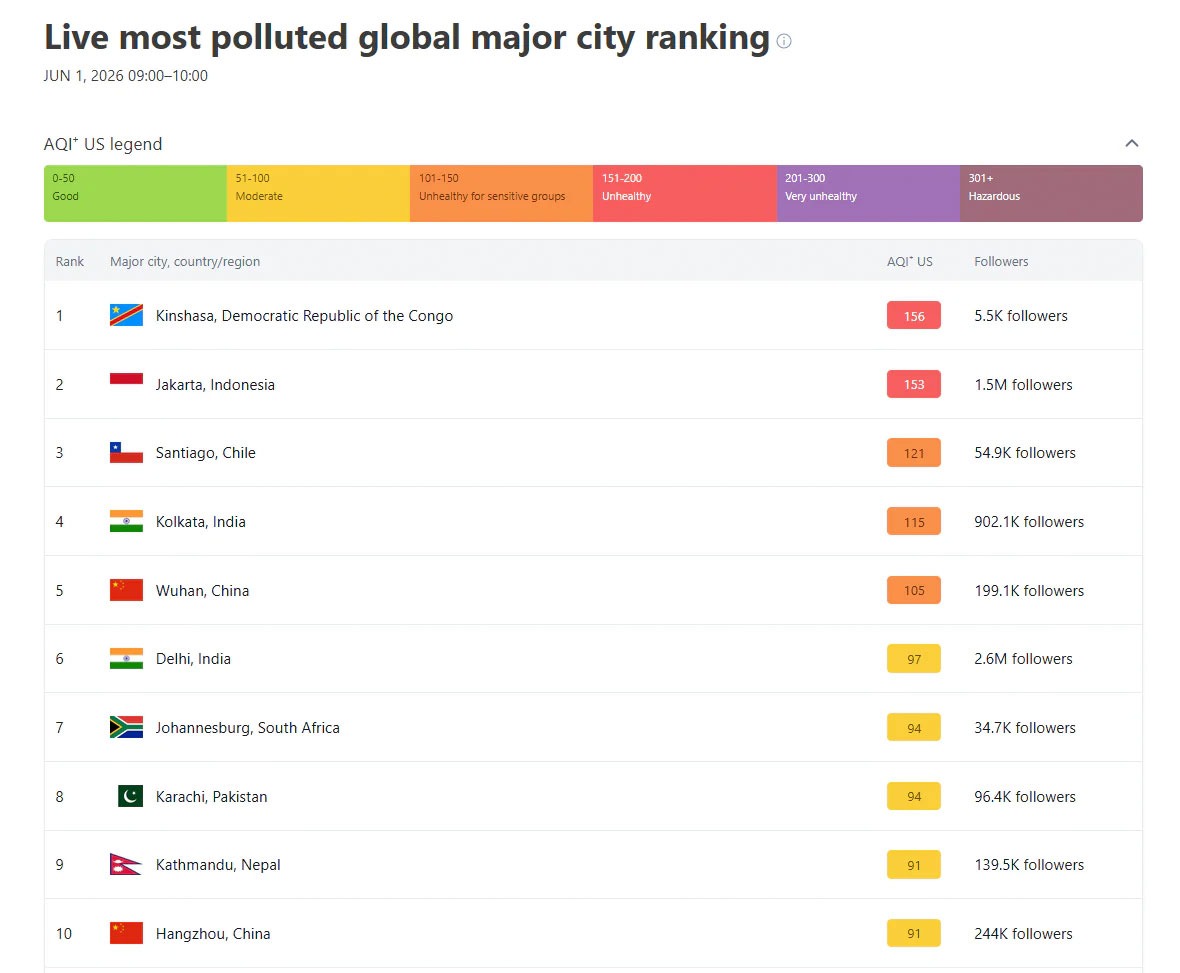
Source: IQAir
I. Data Does Not Lie: Jakarta’s Air Is Overloaded
If you open a real‑time air quality map, Jakarta is often covered in a deep reddish‑brown hue.
Critical exceedance of deadly fine particles PM2.5. Jakarta’s average annual PM2.5 concentration in 2025 reached 34.1 µg/m³ – nearly 7 times the WHO annual guideline of 5 µg/m³, bordering on moderate pollution. Entering 2026, pollution figures have become even more alarming. On April 29, Jakarta’s PM2.5 concentration soared to 69.3 µg/m³, which is 13.9 times the WHO safety standard.
Permanent spot on “world’s worst” lists. As a capital city frequently listed among the ten most polluted cities in the world, Jakarta seems to have become “accustomed” to such rankings. Throughout 2025 and 2026, Jakarta repeatedly entered the top ten most polluted major cities globally – an unbearable reality for millions of local residents.
II. The Heavy Health Toll: Nearly 2 Million Acute Respiratory Infections
Behind these cold chemical figures is the suffering of countless Jakarta citizens.
Shocking respiratory infection data. According to the Jakarta Health Agency, by October 2025, within the Special Capital Region alone, more than 1.9 million people had suffered from acute respiratory infections due to air pollution, with nearly 20% being children. Alarmingly, a preliminary survey by Indonesia’s Environment Minister weeks earlier showed that the number of people experiencing respiratory symptoms due to air pollution across greater Jakarta exceeded 6 million, and the figure continues to rise.
Long‑term health crisis cannot be ignored. Not only adults but also vulnerable children and the elderly are the greatest victims. Local health authorities point out that the lethal combination of poor air quality, high population density, and changing climate patterns keeps respiratory disease prevalence high during the dry season. Persistent acute infections can aggravate existing asthma and cardiovascular diseases, even leading to irreversible lung damage.
III. Not Just Exhaust Fumes: Who Is Creating the Haze Shrouding Jakarta?
Jakarta’s air pollution is a complex “industrial equation”. The terrible air quality results not only from road traffic but also from heavy industry in surrounding areas and seasonal natural conditions.
Vehicle exhaust: the undisputed primary culprit (contributing 57%). The daily traffic of more than 25 million motor vehicles in Greater Jakarta makes transport emissions the most direct source of pollution. Especially during the dry season, up to 57% of pollution comes from combustion in motor vehicles.
Coal power and industry: lurking emission giants. Another core source of Jakarta’s air pollution is not local residents but heavy industries hidden on the city’s edge. According to statistics, as many as 16 coal‑fired power plants are scattered across West Java and Banten, emitting exhaust gases with high concentrations of sulfur oxides into the sky over Jakarta. A 2025 study registered as many as 6,800 industrial smokestacks around Jakarta alone, and many unregistered sources exist.
Seasonal exacerbation and governance bottlenecks. The dry season from May to August, with dry weather and low wind speeds, makes pollutants difficult to disperse, becoming the annual pollution peak. Although the government has tried measures such as water spraying and proposed low‑emission zones (LEZ), analysis indicates that water spraying can temporarily settle coarse particles but may cause PM2.5 concentrations to rebound instantly due to increased humidity – a drop in the bucket. Moreover, low‑emission zones implemented only at single points often reduce city‑wide pollution by just a few percentage points.
IV. Emergency Actions by Authorities: From Promoting Electric Vehicles to Strengthening Multilateral Coordination
Confronted with the imminent crisis, Jakarta’s authorities are accelerating efforts to “break free” through a series of cross‑sectoral measures.
Accelerating the transition to electric transport. Jakarta operates one of the world’s largest bus rapid transit systems, TransJakarta, yet transport emissions still account for half of the city’s total emissions. Therefore, the authorities have set an ambitious target: to have 10,000 electric buses in operation by 2030. This aims not only to reduce carbon emissions but also to attract citizens away from private cars (and their congestion and pollution) by improving public transport services.
Building a regional collaborative governance mechanism. The Jakarta government is accelerating legislation to implement the Low Emission Zone plan, which is expected to reduce city‑wide PM2.5 concentrations by 30% once fully rolled out. At the same time, authorities are strengthening cross‑border cooperation to strictly control coal use and industrial emissions in surrounding satellite cities, and have launched crackdowns on illegal burning in multiple areas.
V. How to Survive Jakarta’s Toxic Air: Authoritative Recommendations
Long‑term urban governance is a heavy lift, but for the millions living in Jakarta, personal protection is an immediate necessity. Indonesian officials and international environmental bodies offer the following advice:
- Monitor in real time, avoid outdoor activities: Check real‑time AQI data via IQAir or other apps before going out. When pollution is high, reduce unnecessary outdoor stays. If AQI exceeds 150, sensitive individuals should avoid going out altogether.
- Keep indoor spaces strictly sealed: During pollution peaks, keep windows and doors tightly shut and set air conditioners to recirculation mode to block the infiltration of high outdoor pollutant concentrations.
- Wear N95 or higher masks: When going out is unavoidable, standard medical masks cannot block PM2.5. You must wear an N95 or higher‑grade protective mask.
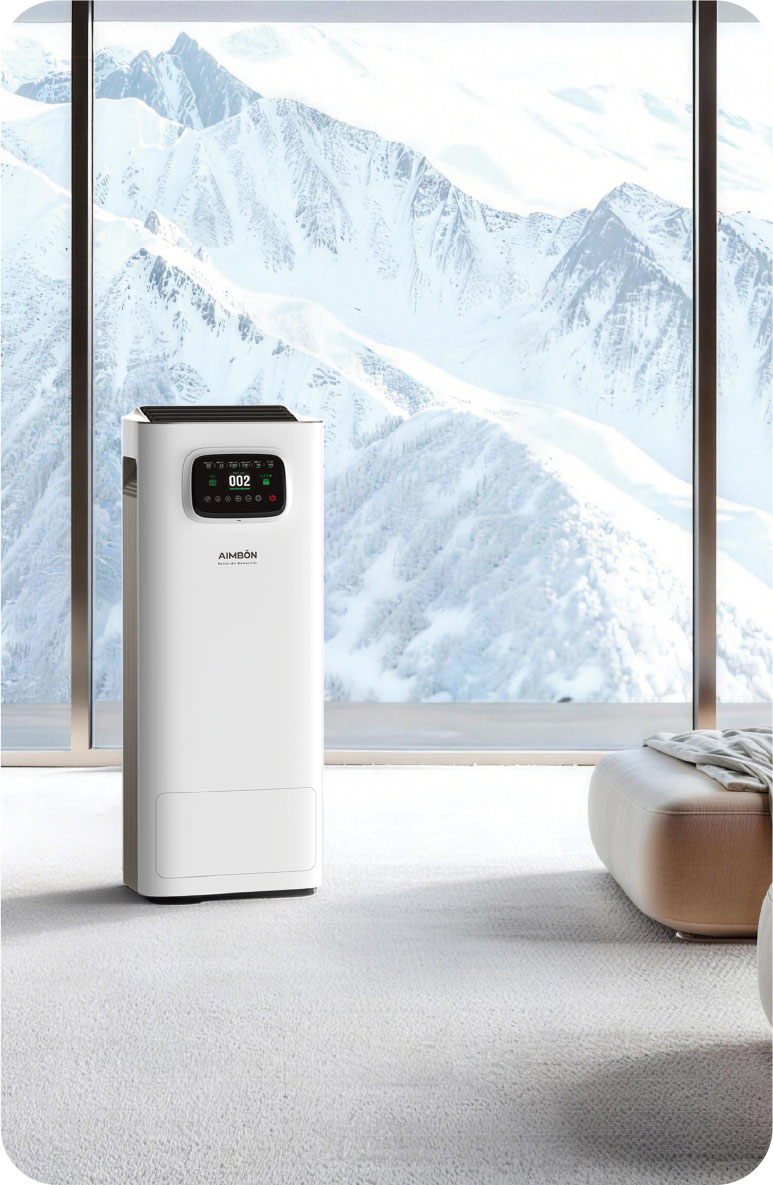
- Use a high‑efficiency air purifier: According to official Indonesian recommendations for residents during severe weather, keeping windows closed and using an indoor air purifier equipped with a HEPA filter is necessary to maintain indoor safety. Aimbon’s Water‑Gate Technology products efficiently purify indoor PM2.5 and dissolve harmful gases like formaldehyde, creating a safe breathing barrier for your home and effectively reducing indoor pollution exposure.
Smog may shroud the sky, but it should not blind people to the need for health vigilance. While cities continue to search for long‑term solutions, personal protection is our last line of defence against pollution.
Aimbon · Water‑Gate Technology – purifying and humidifying in one, safeguarding every breath as a health defence.