
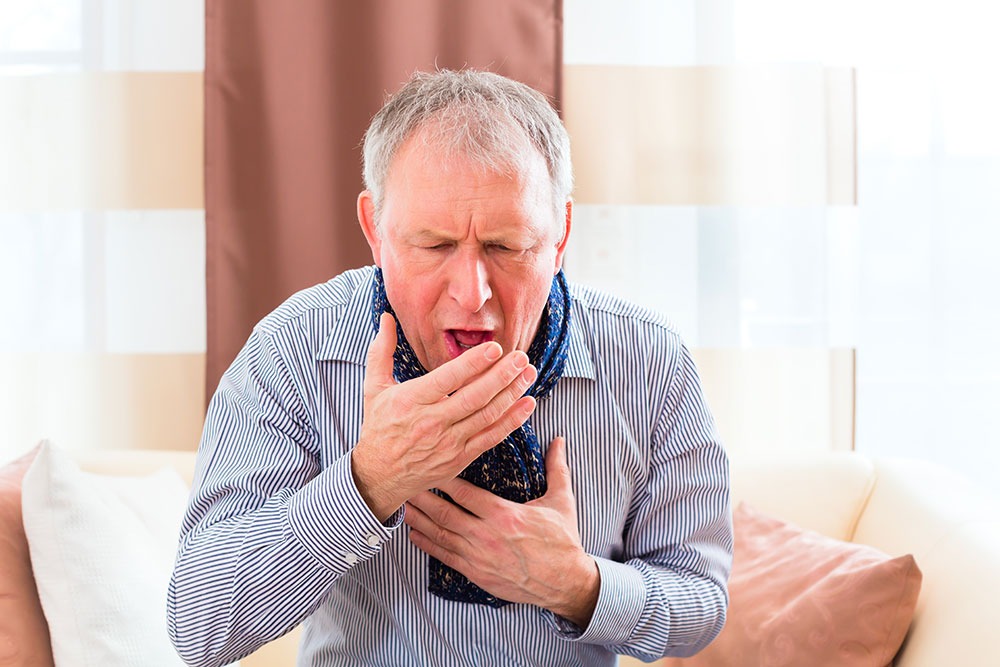
As spring arrives, nature awakens—but for hundreds of millions of allergy sufferers and those with respiratory sensitivities, spring means an unending stream of sneezes and coughs, the “season of suffering.” When pollen, dust mites, and worsening air pollution converge, the respiratory system faces a严峻 survival test. This article examines the medical evidence, drawing on the latest clinical research, to explain why air purifiers are essential for protecting respiratory health.
I. The Three Invisible Threats to Spring Respiratory Health
1. Pollen: The Invisible Airborne Assassin
Dr. Zhang Yinghong, an otolaryngologist at Peking University Third Hospital, explains that spring allergic rhinitis epidemics are primarily driven by the “invisible” pollination of trees such as poplars, willows, and cypresses. Though tiny, these pollen grains are released in massive quantities and can be carried hundreds of kilometers by spring winds.
When pollen particles enter the nasal passages, they bind to IgE antibodies in the immune system, triggering mast cells to release inflammatory mediators like histamine. This cascade produces the classic symptoms: nasal itching, sneezing, and runny nose. For those with allergies, this is an annual immune storm that arrives with clockwork precision.
2. Particulate Matter (PM2.5/PM10): The Respiratory System’s “Slow Knife”
Spring’s frequent alternation of warm and cold air masses creates unstable atmospheric dispersion conditions, allowing particulate matter to accumulate. PM10 can breach nasal barriers to reach the bronchi and alveoli, while PM2.5—small enough to carry viruses and bacteria—can directly enter the bloodstream, triggering systemic inflammation.
Research shows that PM2.5 exposure significantly increases the risk of arterial plaque deposition, induces vascular inflammation and atherosclerosis, and ultimately leads to cardiovascular disease. For already vulnerable respiratory systems, this adds insult to injury.
3. Microorganisms: Pathogens’ “Spring Carnival”
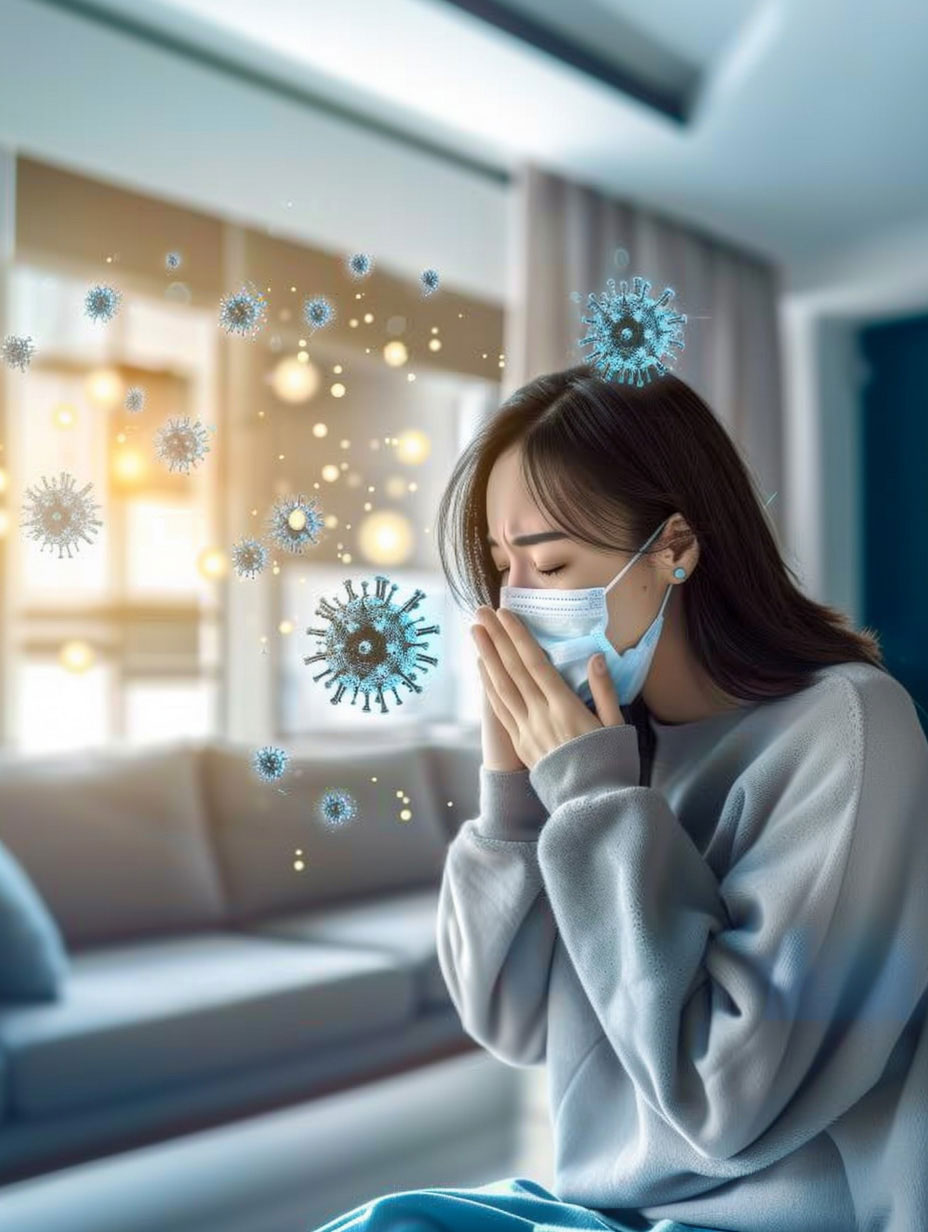
Viruses and bacteria released during coughing and sneezing can remain airborne for extended periods, entering the body through the respiratory tract. In crowded settings like nursing homes, the risk of respiratory infection transmission is particularly acute.
II. The Medical Evidence: What Can Air Purifiers Actually Do?
1. Significantly Reduce Airborne Particle Concentrations
A Swiss crossover study conducted in school environments found that using HEPA air purifiers reduced average classroom particle concentrations by 77% (95% CI 63%-86%). This means air purifiers can improve indoor air quality from “polluted” to near-“clean” levels in a short time.
2. Reduce Respiratory Infection Risk
The same study found that during periods without air purifiers, student absences due to respiratory infections totaled 22; during periods with purifiers, this dropped to 13. Bayesian analysis indicated that using air purifiers could reduce infection risk by approximately 27% (relative risk 0.73), with a posterior probability of 91% supporting infection risk reduction.
3. Alleviate Allergy Symptoms
Breakthrough Evidence from Cat Allergen Challenge Studies
A randomized, double-blind, placebo-controlled study published in Respiratory Medicine in 2025 provided the first validation of air purifiers’ clinical efficacy in allergy patients using an environmental exposure chamber.
Study Design:
• 30 cat-allergic asthma patients (GINA 1-2) participated
• Exposed to 80 ng/m³ of cat allergen Fel d 1 for 2 hours
• Active group used HEPA H13-grade air purifiers; placebo group used non-operating devices
Key Findings:
• Significant allergen reduction: Active group reduced airborne Fel d 1 from 79.6 ng/m³ to 14.2 ng/m³
• Delayed asthma response: At 50 minutes exposure, no active group participants showed early asthmatic reactions, while 53.3% of placebo group did
• 52.2% reduction in rhinoconjunctivitis symptoms: Active group symptom score averaged 1.6 vs. placebo 3.3 (p=0.03)
• Reduced asthma reaction incidence: 40% of active group showed FEV1 decline vs. 73.3% in placebo group
Impact on Allergic Rhinitis
A randomized, double-blind Korean study similarly confirmed that placing HEPA air purifiers in home bedrooms and living rooms significantly reduced PM2.5 and PM10 concentrations for dust mite-allergic patients, while decreasing their use of anti-allergy medications.
4. Potential Benefits for COPD Patients
A US randomized controlled trial in patients with moderate-to-severe COPD showed that after 6 months of HEPA air purifier use:
• Active group showed significantly greater improvement in respiratory symptom scores than placebo (-0.8 points)
• Moderate exacerbation risk reduced by 68% (incidence rate ratio 0.32)
• Rescue medication use reduced by 46% (incidence rate ratio 0.54)
Notably, patients who spent more time indoors daily derived greater benefit from air purifiers.
5. Preventive Value for Infants
An ongoing multicenter randomized controlled trial (BREATHE study) plans to enroll 228 infants hospitalized for bronchiolitis, equipping their bedrooms and living rooms with HEPA air purifiers post-discharge to observe whether this reduces subsequent respiratory symptom burden. The study hypothesizes that improving indoor air quality may be an effective secondary prevention strategy for reducing respiratory symptoms in high-risk infants.
6. Protection for Vulnerable Settings Like Nursing Homes
A UK randomized controlled trial (AFRI-c study) planned to include 91 nursing homes aims to assess whether HEPA air purifiers reduce winter respiratory infection events among residents. The study will deploy purifiers in communal areas and private bedrooms, answering this question with the most rigorous evidence-based methods.
III. Proper Use of Air Purifiers: Medical Recommendations
1. When to Use?
Peking University Third Hospital experts emphasize: During allergy season, NEVER open windows for ventilation! Opening windows only allows more outdoor pollen indoors, worsening symptoms. The correct approach is to close windows and run air purifiers.
2. How to Choose?
Based on medical evidence, priority should be given to:
• HEPA H13-grade or higher filters: ≥99.95% efficiency for 0.3-micron particles
• Sufficient air flow: Ensure air can be purified at least 5 times per hour
• Activated carbon composite filters: Also remove gaseous pollutants
3. Who Needs It Most?
Based on current evidence, the following groups should prioritize air purifier use:
• Patients diagnosed with allergic rhinitis/asthma
• Infants (especially post-bronchiolitis)
• Patients with chronic respiratory diseases such as COPD
• Vulnerable populations like nursing home residents
IV. Evidence Quality and Limitations
It must be objectively noted that the quality of evidence for air purifier studies varies:
Disease Type | Evidence Strength | Key Findings
Allergic Asthma/Rhinitis | High (RCT) | Symptom reduction, decreased medication use
Respiratory Infection Prevention | Moderate (observational) | 27% reduction in infection-related absences
COPD | Moderate (RCT) | Symptom improvement, reduced exacerbations
Infant Prevention | Pending | Studies ongoing
Nursing Home Protection | Pending | Studies ongoing
Study limitations include small sample sizes, short follow-up periods, and inability to achieve complete blinding in some cases. However, overall, high-quality clinical evidence is progressively accumulating, supporting air purifiers as effective adjuncts for respiratory health management.
V. Conclusion: The Medical Case for Air Purifiers
Synthesizing the available evidence-based medical data, the necessity of air purifiers can be understood at multiple levels:
From a physiological perspective: Spring brings simultaneous spikes in airborne pollen, particulate matter, and microorganisms—a “triple threat” to the respiratory system. Air purifiers, through physical filtration mechanisms, can effectively reduce indoor concentrations of these harmful substances, creating a “safe zone” for respiration.
From a clinical evidence perspective: Multiple randomized controlled trials have confirmed that air purifiers can:
• Reduce respiratory infection risk
• Alleviate allergy symptoms and asthmatic reactions
• Decrease COPD exacerbations
• Reduce anti-allergy medication use
From a public health perspective: Given that modern people spend over 90% of their time indoors, and indoor pollutant concentrations are often 2-5 times higher than outdoors, improving indoor air quality has significant public health implications.
From a preventive medicine perspective: As a non-pharmacological intervention, air purifiers have no drug side effects and are suitable for a wide population range from infants to the elderly, aligning with the “prevention first” health philosophy.
As Peking University Third Hospital experts state: During allergy season, “Don’t open windows! This bears repeating three times.” Closing windows and running air purifiers is the simplest yet most effective step for spring respiratory self-protection.
For the respiratory system, every clean breath is a direct investment in health. When spring pollen fills the air and PM2.5 silently invades, a qualified air purifier may be the last line of defense protecting you and your family’s respiratory health.