
In dry seasons, heating and air conditioning make indoor air uncomfortably dry, and humidifiers become essential. But when searching online, you’ll find two main types: visible mist (ultrasonic) humidifiers and invisible mist (evaporative) humidifiers. What exactly is the difference? Which one is right for your home? This article explains the principles, pros and cons, suitable scenarios, and health impacts, helping you make the right choice.
1. How They Work: One “Shatters” Water, the Other “Dries” It
Visible mist (ultrasonic) humidifier: Uses high‑frequency vibration (over 1.7 million times per second) to break water into tiny droplets, then a fan blows them out as visible white mist. Pros: fast mist output, low energy consumption, quiet operation. Cons: requires purified water. If you use tap water, minerals (calcium, magnesium) are also broken down and dispersed, forming “white dust” on furniture, floors, and appliances – and potentially inhaled.
Invisible mist (evaporative) humidifier: Uses a fan to accelerate natural water evaporation from a wick (evaporative pad). It emits invisible water vapour – similar to wind blowing over a lake. No white dust, no strict water quality requirement (tap water is fine). However, evaporation is slower, energy use slightly higher, and noise is somewhat greater because the fan runs continuously.
2. Key Differences at a Glance
| Feature | Visible Mist (Ultrasonic) | Invisible Mist (Evaporative) |
|---|---|---|
| Working principle | High‑frequency vibration breaks water into droplets | Fan accelerates natural evaporation |
| Mist appearance | Visible white mist | Invisible vapour |
| White dust | Yes (if tap water used) | No |
| Water quality requirement | Must use distilled/purified water | Tap water is fine |
| Humidification speed | Fast, immediate mist | Relatively slower |
| Power consumption | Low (20‑30W) | Slightly higher (30‑50W) |
| Noise level | Low (30‑35 dB) | Slightly higher (fan noise, 35‑45 dB) |
| Bacteria risk | Tank can breed bacteria; if not cleaned, they spread with mist | Wick needs regular replacement, but bacteria less likely to spread |
| Consumables | Usually none (needs frequent cleaning) | Evaporative wick replacement every 3‑6 months |
| Best for | Small spaces, noise‑sensitive users willing to use purified water | Bedrooms, homes with babies/elderly, hard water areas, low‑maintenance users |
3. Which One Should You Choose? Three Criteria
1. What’s your tap water quality like?
If your water is hard (scale builds up quickly), an ultrasonic humidifier requires purified water – otherwise white dust will coat your furniture and may be inhaled. If you don’t want to buy distilled water, choose an evaporative model.
2. Which room will it be used in?
Bedroom: noise‑sensitive – ultrasonic is quieter but needs regular cleaning and purified water. Evaporative units are slightly louder, but modern models achieve around 35 dB. Nursery or elderly room: evaporative is safer (no white dust, no aerosolized bacteria).
3. How much maintenance effort are you willing to put in?
Ultrasonic tanks need weekly cleaning to prevent mould and bacteria. Evaporative units only require periodic wick replacement – much less hassle.
4. Advanced Choice: Purifier‑Humidifier Combos
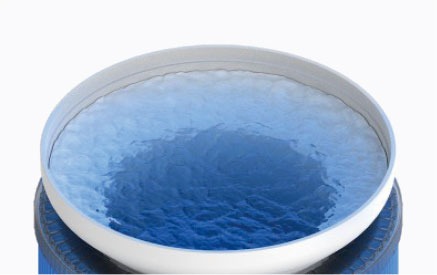
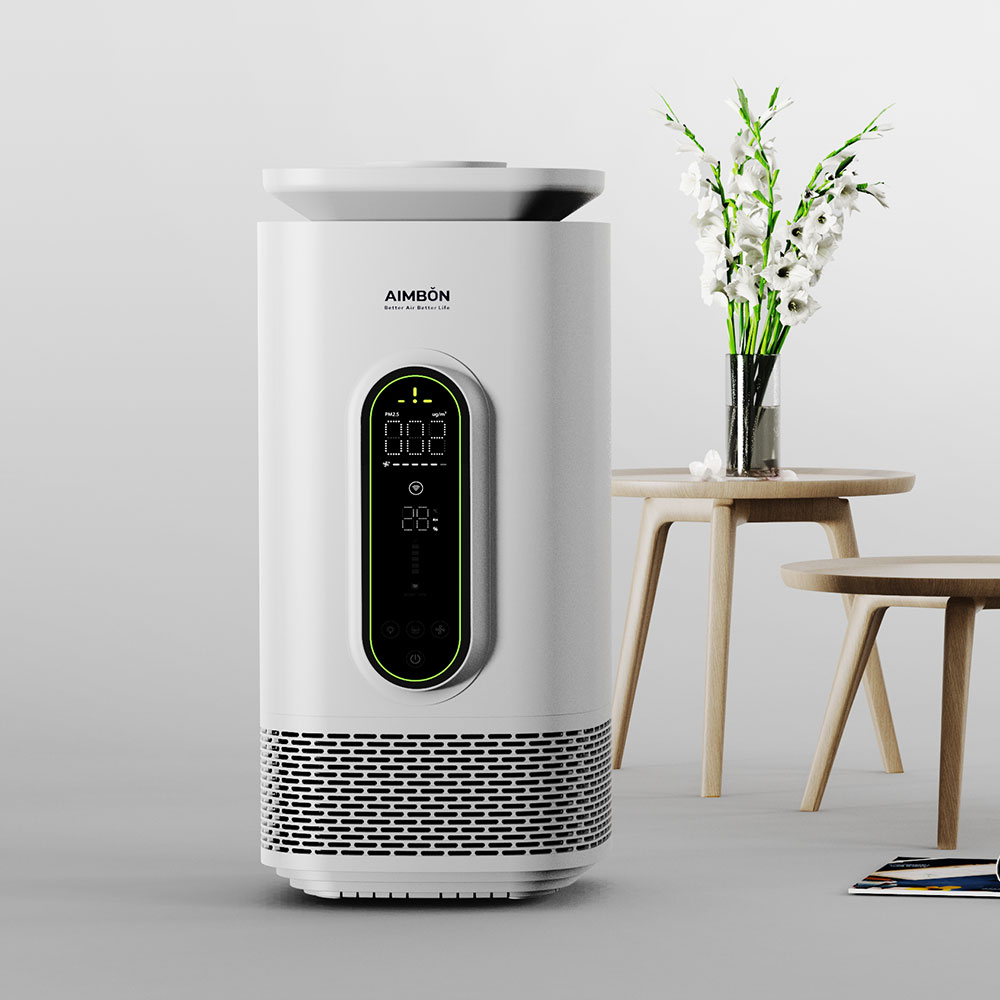
If you want invisible‑mist purity plus air cleaning, consider a purifier‑humidifier combo like the Aimbon T3/T5 series. They use water‑wash (similar to evaporative but more efficient) humidification, plus a built‑in HEPA filter to capture PM2.5, formaldehyde, and other pollutants – “purify first, then humidify”. Humidity automatically stays at 45%‑55%. No white dust, no frequent wick changes, and sleep mode noise is just 25 dB – quieter than most evaporative units.
5. Summary Recommendations
- If you have a water purifier and don’t mind cleaning often, an ultrasonic (visible mist) humidifier is cost‑effective and quiet.
- If you want low maintenance, have babies/elderly, or hard tap water, choose an evaporative (invisible mist) humidifier.
- If you also want better air quality, go for a purifier‑humidifier combo (e.g., Aimbon T3) for dual health benefits.
Whichever you choose, remember the goal: maintain relative humidity between 45%‑55%. Above 60% encourages dust mites and mould; below 40% causes respiratory issues. Use a hygrometer and humidify scientifically.
Aimbon · Water‑Gate Technology – purification and humidification in one, creating a forest‑grade breathing environment.
Frequently Asked Questions
Q1: Which type of humidifier is better for people with allergies and asthma?
Answer: Evaporative (invisible mist) humidifiers or purifier‑humidifier combos are better. Ultrasonic (visible mist) humidifiers, if tap water is used, produce white dust (mineral particles) that can become airborne particulate matter and irritate the respiratory tract. Even with purified water, if the tank is not cleaned regularly, bacteria and mould can grow and spread with the mist, triggering allergies or asthma. Evaporative humidifiers produce no white dust, and the wick filters impurities from the water, making it harder for bacteria to become airborne. A purifier‑humidifier combo (like the Aimbon T3) goes further: it first filters the air through a HEPA filter, removing pollen, dust mites, and other allergens, then humidifies – making it the safest choice for allergy and asthma sufferers.
Q2: Is it safe to run a humidifier all night?
Answer: Yes, it is safe as long as you use it properly. Important tips: ① Choose a humidifier with automatic humidistat and set the target humidity to 45%‑55% to avoid over‑humidification (>60% encourages dust mites and mould). ② Use purified water (for ultrasonic) or tap water (for evaporative), and keep the tank clean. ③ Place the unit away from your bedside so mist does not blow directly on you. ④ Clean regularly (weekly for ultrasonic, replace wicks as recommended for evaporative). If the humidifier has auto‑shutoff when water runs out and a timer function, overnight use is even safer. Aimbon T3/T5 series feature smart humidity control and low‑water protection, so you can safely run them through the night.
Q3: Which type of humidifier requires less maintenance?
Answer: Evaporative (invisible mist) humidifiers and purifier‑humidifier combos require less maintenance. Ultrasonic units need weekly tank cleaning and water changes, otherwise bacteria and algae grow rapidly. Evaporative units only require wick replacement every 3‑6 months; daily maintenance is minimal (though a monthly rinse is recommended). Purifier‑humidifier combos (such as Aimbon T3) fall in between: the HEPA filter is replaced every 6‑12 months, the tank has anti‑bacterial design, and routine care involves adding water and a quick weekly rinse. Overall, if you want a “set‑it‑and‑forget‑it” experience, choose evaporative or a combo unit.