
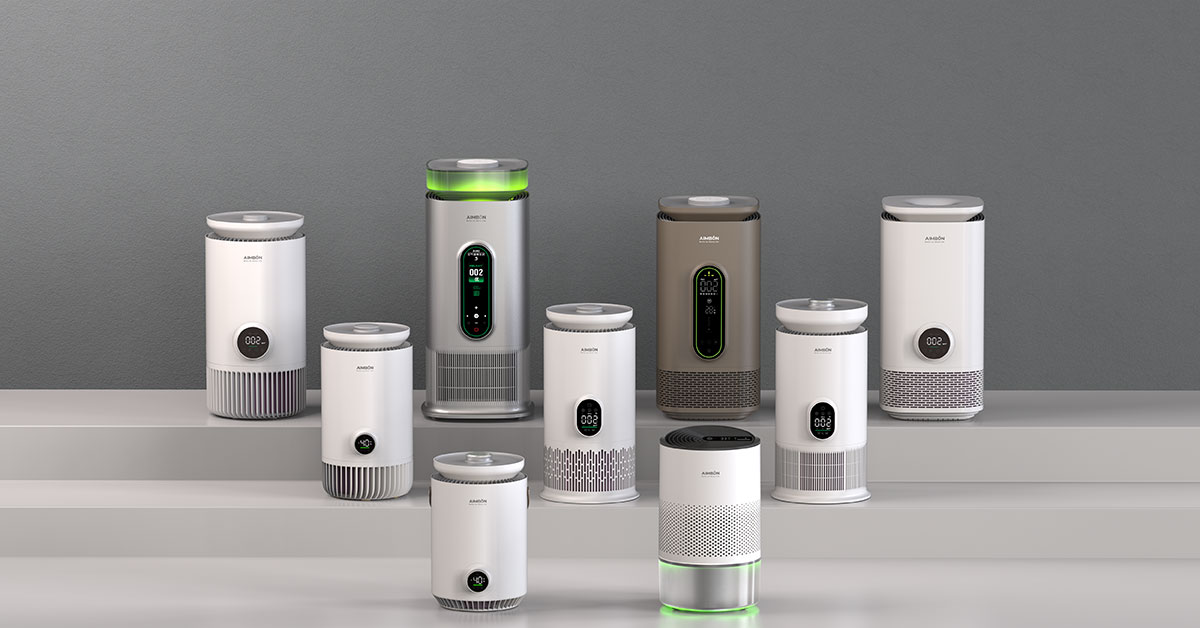
When people talk about air humidifiers, the most common associations are often relieving skin tightness, chapped lips, or throat discomfort caused by dryness. However, maintaining appropriate indoor humidity goes far beyond improving physical comfort—its profound impact on human health is far greater than most people realize. In modern households, the air humidifier is transforming from a “nice-to-have small appliance” into a “necessity for maintaining a healthy environment.” This article will systematically elaborate on the multiple health benefits of air humidification from the perspectives of physiology, immunology, and environmental medicine, and explain why it should be standard equipment in every home.
I. Humidity and Human Health: The Overlooked Physiological Foundation
The human body is a life system highly dependent on a water-based environment. Maintaining normal physiological functions requires a delicate balance between environmental humidity and the body’s water metabolism. Air that is too dry or too humid can disrupt this balance.
Relative humidity is the key indicator measuring the amount of water vapor in the air. The World Health Organization recommends a comfortable indoor humidity range of 40%-60%. Below this range, the air is too dry; above this range, it is too humid—both pose health risks.
II. Health Hazards of Dry Air: The Invisible Threat
Winter heating, summer air conditioning, and arid northern climates—dry air has become a common phenomenon in modern life. The health hazards of dry air are multi-dimensional and systemic:
1. Compromised Respiratory Defense System
The respiratory tract is the body’s first line of defense, and its protective mechanisms are highly dependent on a moist environment:
Impaired Mucociliary Clearance: The respiratory tract is lined with ciliated epithelial cells covered by a layer of mucus. These cilia beat approximately 1000 times per minute, pushing inhaled particles and pathogens upward via the mucus, eventually expelled through coughing or swallowing. This process requires the mucus to maintain appropriate viscosity. When air is too dry, evaporation from the respiratory tract accelerates, mucus becomes thick and sticky, ciliary movement is hindered, and clearance efficiency drops significantly.
Delayed Pathogen Removal: Studies show that in environments with relative humidity below 40%, the survival time of influenza viruses lengthens, while the respiratory tract’s ability to clear viruses decreases. This “double-edged” effect of opposing trends makes dry seasons peak periods for respiratory infections.
2. Weakened Skin Barrier Function
The skin is the body’s largest organ, and its barrier function also depends on moisture:
Decreased Stratum Corneum Hydration: The outermost layer of the skin, the stratum corneum, needs to maintain 10%-20% water content to sustain normal barrier function. In dry air, evaporation from the stratum corneum accelerates, leading to dry, flaky, and itchy skin.
Compromised Barrier Integrity: Under prolonged dry conditions, the structure of lipids between stratum corneum cells changes, creating tiny fissures in the skin barrier. External irritants and allergens penetrate more easily, triggering or worsening skin conditions like eczema and dermatitis.
3. Threats to Eye Health
The tear film is a thin layer of fluid covering the eye’s surface, crucial for maintaining corneal health and preventing infection. Dry air accelerates tear evaporation, disrupting tear film stability, leading to:
• Worsened dry eye symptoms: dryness, grittiness, foreign body sensation, burning
• Discomfort wearing contact lenses
• Increased risk of corneal epithelial punctate erosion
III. Health Benefits of Optimal Humidity: From Prevention to Therapy
Maintaining indoor humidity within the ideal range of 40%-60% offers multiple health benefits:
1. Enhanced Respiratory Defense
Optimized Mucociliary Clearance: Maintains appropriate mucus viscosity in airways, maximizing ciliary beating efficiency.
Accelerated Pathogen Removal: Restores the respiratory tract’s physical ability to clear viruses and bacteria to normal levels.
Sustained Airway Moisture: Reduces dry cough and sore throat caused by dryness.
2. Skin Barrier Protection
Maintained Stratum Corneum Hydration: Slows evaporation from skin surface, keeping stratum corneum moisture at healthy levels.
Promoted Barrier Repair: Creates optimal environment for self-repair of damaged skin barriers.
Itch Relief: For patients with atopic dermatitis or eczema, optimal humidity can significantly reduce itching.

3. Improved Sleep Quality
During sleep, the body continuously loses water through evaporation. In dry environments, this evaporation accelerates, potentially causing:
• Nighttime throat dryness, increased awakenings
• Worsened snoring (dryness makes upper respiratory tissues more prone to vibration)
• Morning dry mouth and sore throat
Optimal humidity reduces these disturbances, making sleep more restful and recovery more effective.
4. Allergy Symptom Relief
Dust Mite Control: Dust mites are a primary indoor allergen, requiring relative humidity >60% for survival. Keeping humidity below 50% effectively inhibits dust mite reproduction.
Reduced Airway Irritation: Dryness makes respiratory mucosa more sensitive, amplifying reactions to trace irritants. Optimal humidity lowers this sensitivity.
5. Special Protection for Infants and Children
Infants have narrower airways and more delicate mucous membranes than adults, making them less tolerant of dry environments. Maintaining optimal humidity is especially crucial for infants:
• Reduces nighttime crying caused by nasal congestion or dry throat
• Lowers risk of respiratory infections
• Improves eczema symptoms
IV. Why is a Humidifier a Household Necessity? Five Core Reasons
1. An Inevitable Need in Modern Living Environments
Modern homes are increasingly airtight, and the use of winter heating and summer air conditioning generally keeps indoor humidity low. Taking northern winters as an example, unhumidified indoor relative humidity often drops below 20%, far from the healthy range. This is not an “occasional encounter” problem, but an inherent characteristic of modern lifestyles.
2. Cost-Effectiveness of Health Prevention
A high-quality humidifier costs anywhere from tens to thousands of dollars but can cover several years of health protection for the entire family. Compared to medical expenses from respiratory infections or spending on skincare products and medications for skin issues, the cost-effectiveness of a humidifier is extremely high. It represents a preventive health investment, not merely consumer spending.
3. Universal Applicability Across Family Members
The health benefits of a humidifier cover all family members:
Infants & Toddlers: Respiratory protection, restful sleep, eczema improvement
School-Age Children: Reduced cross-infection risk at school, improved concentration
Adults: Enhanced work efficiency, sleep quality, skin condition
Elderly: Strengthened respiratory defense, stabilized chronic conditions
Pets: Healthy skin and coat, respiratory protection
4. Broad Adaptability Across Usage Scenarios
Bedroom: Extended use at night improves sleep environment.
Children’s Room: Round-the-clock protection for sensitive airways.
Living Room: Daytime activity space covering the whole family.
Study: Maintains comfort during focused work or study.
Office: A remedy for dry air-conditioned environments.
5. Synergy with Other Health Devices
Humidifiers work synergistically with air purifiers: purifiers remove particles and pollutants, while humidifiers maintain optimal humidity—together, they build a healthy indoor microenvironment. In modern homes, this “air health power couple” is increasingly becoming standard equipment.
V. How to Choose and Use a Humidifier Scientifically?
1. Type Selection
Ultrasonic: Uses high-frequency vibration to break water into fine mist. Advantages: quiet, energy-efficient, affordable. Note: Requires purified water to prevent white dust.
Evaporative: Uses a fan to accelerate natural water evaporation. Advantages: no visible mist, no white dust, built-in antimicrobial features. Note: Slightly noisier, higher cost.
Steam Vaporizer: Heats water to produce steam. Advantages: thorough sterilization, pure mist output. Note: Higher energy consumption, burn risk.
2. Key Purchasing Criteria
Humidification Output: Choose based on room size; generally 200-250 ml/h per 10 square meters.
Water Tank Capacity: Larger capacity means less frequent refilling, but requires regular cleaning.
Noise Level: For bedroom use, pay attention to sleep mode noise levels.
Smart Control: Humidistat function automatically maintains target humidity, preventing over-humidification.
3. Usage Precautions
Regular Cleaning: Clean the tank at least weekly to prevent bacterial growth.
Water Quality: Ultrasonic models recommend using purified or distilled water.
Humidity Monitoring: Use a hygrometer to avoid over-humidification (humidity >60% may promote dust mites and mold).
Placement: Position 0.5-1 meter above the floor, away from electronics and walls.
VI. Conclusion: Invisible Protection, Visible Health
The value of an air humidifier lies not in flashy features, but in its ability to silently bridge the gap between modern living environments and the body’s physiological needs. When you sleep peacefully on a dry winter night, when your child’s eczema gradually improves, when you no longer wake with a sore, dry throat—these are not coincidences. They are the health dividends of optimal humidity.
In modern households, the air humidifier is no longer a dispensable “small appliance,” but a necessity for maintaining foundational health. Together with the air purifier, it forms a dual defense line for household air health: the purifier removes pollutants, the humidifier maintains physiological comfort. Working in synergy, they create a truly healthy and comfortable breathing environment for every family member.
Every moist breath nourishes the respiratory defense system. Every restful night is prime time for the body’s self-repair. The air humidifier, in this invisible way, guards the health of you and your family.