
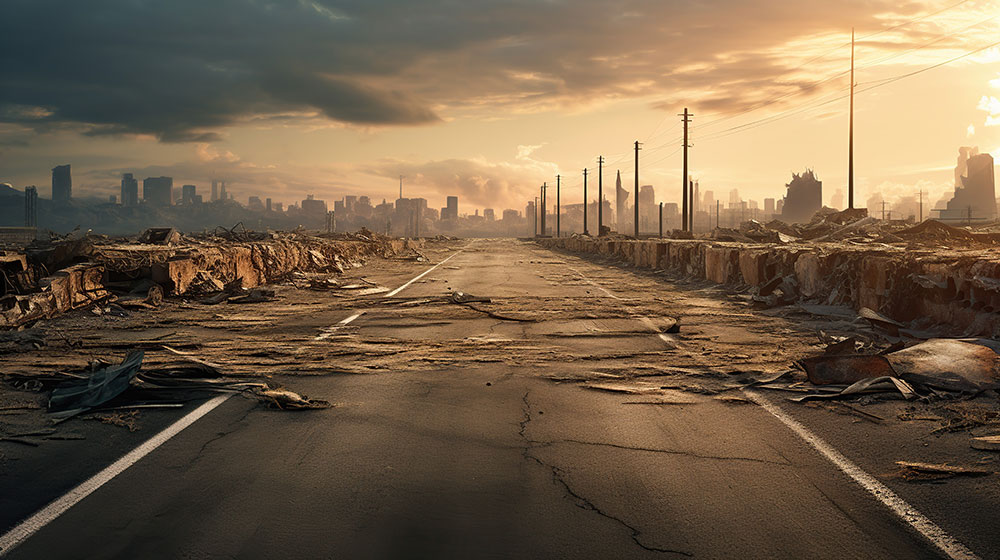
 The land of the Middle East is ancient and fragile. It is the cradle of civilization, yet it has become the most enduring testing ground for modern warfare. When the world’s attention focuses on rapidly shifting frontlines, explosions echoing across cities, and ever-updating casualty figures, another far more silent and persistent disaster is spreading beneath the soil.
If conflict in the Middle East continues, or even escalates further, the environment will be the ultimate loser. This catastrophe will not end with the signing of a peace agreement—it will torment the people of this land for generations through polluted air, undrinkable water, barren soil, and deformed infants.
The Persian Gulf: An Oil-Soaked “Dead Sea”
If the war expands, the Persian Gulf will face an irreversible ecological death sentence. This semi-enclosed shallow sea has an extremely long water exchange cycle—meaning any pollutant that enters has nowhere to go, only circulating, concentrating, and sedimenting year after year.
The Curse of Oil
The seabed and coastline of the Persian Gulf are densely packed with the world’s most concentrated oil infrastructure: drilling platforms, pipelines, storage tanks, and supertankers that could become targets at any moment. In previous conflicts, Kuwait’s oil wells burned for months, releasing massive amounts of black smoke and sulfur dioxide into the atmosphere, with “black rain” falling hundreds of kilometers away. If similar events recur, or on an even larger scale—such as multiple tankers being destroyed simultaneously in the Strait of Hormuz—the consequences would be catastrophic.
One hundred million barrels of oil could gush into the Persian Gulf. This is not alarmist speculation. If multiple oil fields and tankers were attacked simultaneously, this figure could easily be reached. It would be ten times the amount of oil spilled during the 1991 Gulf War. This sea would become a giant “crude oil soup.”
The polycyclic aromatic hydrocarbons in oil would directly poison plankton—the foundation of the entire marine food chain. Fish eggs and larvae would die in massive numbers. Surviving fish would accumulate toxins in their bodies, magnified through the food chain, ultimately entering human consumers. Coastal fishermen would lose their livelihoods, their catch reeking of oil, unsellable.
The Tipping Point of the Freshwater Crisis
Arab countries along the Persian Gulf depend almost entirely on desalination plants for drinking water. The intakes of these plants are precisely located in coastal waters. Once oil slicks cover the sea surface, or chemical dispersants push oil into deeper waters, desalination plants would be forced to shut down. The taps of millions would run dry within weeks.
Without water, there is no life. In the desert, the loss of clean water is more deadly than any bomb. This would trigger a humanitarian catastrophe far beyond the boundaries of the war zone, forcing tens of millions to become “environmental refugees.”
The Land of Two Rivers: From Cradle of Civilization to Toxic Graveyard
The Tigris and Euphrates rivers gave birth to humanity’s earliest civilizations. But under the shadow of sustained conflict, these two mother rivers are slowly dying.
Upstream Dams and Downstream Desiccation
Sustained conflict will intensify the use of water as a weapon. Transboundary river disputes between Turkey, Syria, and Iraq will become more bloody. Upstream countries may cut off water flow as leverage, leaving downstream Iraq and the Mesopotamian wetlands facing complete desiccation. Hundreds of thousands of Marsh Arabs who depend on the wetlands would be displaced once again—this time, they may never return, as their homeland turns into a salt desert.
The Venom of Industry and War
Attacks on industrial facilities have never ceased. When cities like Mosul and Raqqa were destroyed during the war on terror, the ruins of factories, refineries, and power plants dumped large amounts of heavy metals and persistent organic pollutants into the rivers. If new conflicts expand, similar scenes will repeat in more cities.
These pollutants do not disappear. Mercury, lead, and cadmium settle in riverbed silt, carried by floodwaters to irrigate farmland, then enter the food chain and human bodies. Rates of congenital deformities and childhood cancer in rural areas of southern Iraq are already higher than normal. If war continues, this generation of children will bear an even heavier health curse.
The “Radioactive Legacy” of Depleted Uranium Weapons
Since the 1991 Gulf War, US-led coalition forces have used large quantities of depleted uranium munitions in Iraq. These munitions, after penetrating armor, oxidize to form tiny aerosol particles that disperse with the wind or settle in the soil.
The radioactive half-life of depleted uranium is 4.5 billion years. Its chemical toxicity is equally deadly. If future conflicts again see large-scale use of depleted uranium weapons—the suburbs of Fallujah, Basra, and southern Baghdad could become no-go zones for humans.
Fallujah has been called the “cancer capital of Iraq.” Childhood cancer rates there have soared several times over, and congenital deformity rates shock the world. This is not a natural phenomenon; it is the medical signature of war. If the Middle East conflict continues, new “Fallujahs” will keep emerging. Doctors will face disease syndromes they have never seen before, and their patients—children who played on contaminated soil, who drank polluted water—will become living monuments to this ecological war.
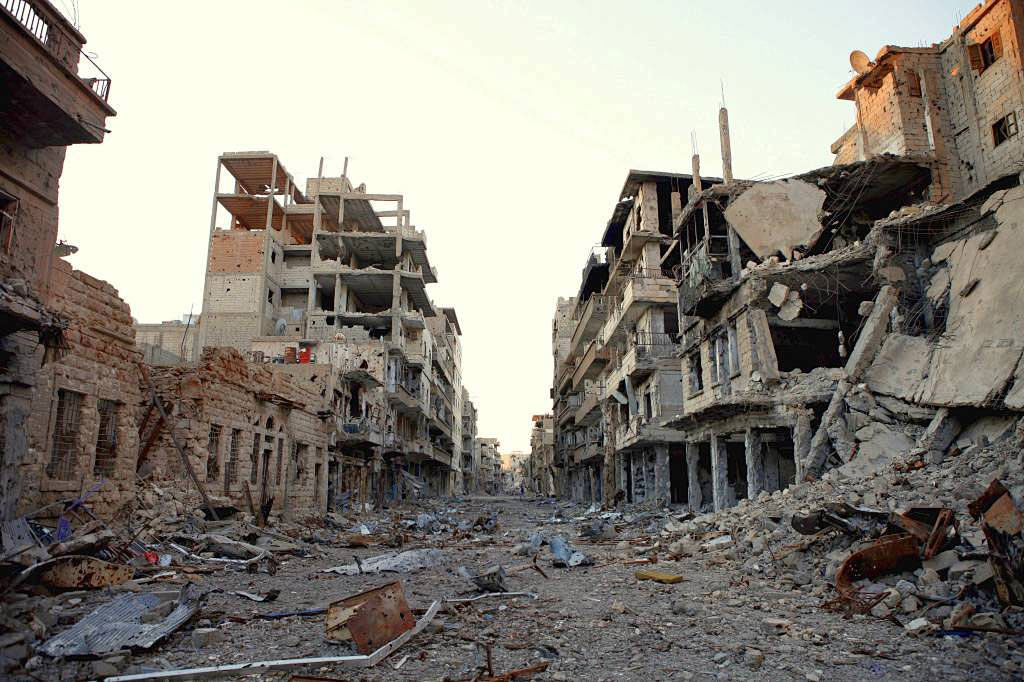
Air: The Invisible Killer
Sustained conflict will turn the skies of the Middle East into a vast gas chamber.
Oil well fires will spew sky-darkening black smoke; sulfur dioxide and nitrogen oxides will combine with atmospheric moisture to form acid rain, falling on farmland and cities. Carcinogens released from burning cities—dioxins, furans, PAHs—will drift hundreds of kilometers with the wind, forcing the entire region’s residents into an unavoidable “breathing experiment.”
The desert is already dusty. The roar of war machines, tank treads, and bomb blasts will churn up more surface dust. This dust will be mixed with depleted uranium particles, heavy metals, and residues from unexploded ordnance. Sandstorms will no longer be purely natural phenomena, but a radioactive, toxic hybrid threat.
Studies have shown that the frequency of dust storms in the Gulf region increased significantly after major military operations. If war becomes normalized, the skies across the Middle East will remain gray year-round, and respiratory diseases will become the number one killer.
Land: No Longer Growing, Only Ruins
The cruelest legacy of sustained war is the death of the land itself.
Large-scale military movements destroy topsoil. Landmines and unexploded ordnance are scattered across farmland, preventing farmers from cultivating—not because they lack seeds, but because every step risks losing a leg. Along the Iraq-Kuwait border, once fertile farmland has become a mine-strewn no-man’s-land. If war spreads, Syria’s breadbasket, Iran’s agricultural provinces, and Israel’s citrus groves could follow the same path.
The establishment and expansion of military bases occupy vast tracts of land. These lands, soaked in aviation fuel, hydraulic fluid, and weapon cleaners, become barren. When the military finally withdraws, they leave behind not peace, but chemical deserts that will take centuries to naturally recover.
The Collapse of Biodiversity
The Middle East is a biodiversity hotspot, home to numerous endemic species. Sustained war will accelerate their extinction.
The coral reefs of the Persian Gulf are already bleaching due to climate change. Oil pollution would be the final straw. Once the corals die, hundreds of species of fish and invertebrates that depend on them will follow.
The Mesopotamian wetlands are a critical stopover for tens of thousands of migratory birds along their flyways. If the wetlands dry up or become polluted, these birds will lose their refueling stations. Population numbers could plummet, leading to the extinction of some species.
Wild mammals in the desert—Arabian oryx, sand cats, hyenas—will be pushed to the brink of extinction by shrinking habitats and poaching. The chaos and poverty of wartime make poaching a means of survival. These species, already struggling at the edge of existence, will be unable to withstand another shock.
The “War Accelerator” of Climate Change
The impact of war on the global climate is equally significant. Large-scale military operations, burning oil wells, and infrastructure reconstruction will all emit massive amounts of greenhouse gases. At a time when humanity urgently needs to reduce emissions to address the climate crisis, war renders all efforts futile.
More tragically, the Middle East is already one of the regions most severely affected by climate change. Temperatures are rising at twice the global average, and water resources are increasingly scarce. War acts like an accelerator of climate change, pushing already fragile ecosystems toward collapse. How will a world made hotter, drier, and more polluted by war feed its people?
Conclusion: What Will the Children Born After the War Inherit?
If war in the Middle East continues, the ultimate victims will not be soldiers on the battlefield, nor civilians in the news, but the children born after the war.
They will grow up drinking lead-contaminated water, inhaling dust mixed with depleted uranium, eating food barely grown from salt-poisoned soil. They will face unknown cancer clusters, unfamiliar genetic diseases, and a stolen future.
An Iraqi mother, holding her deformed infant in a Fallujah hospital, said: “We didn’t make the war, but our children are paying the heaviest price for it.” This statement will be the shared indictment of all mothers in the future Middle East.
War may end someday, but there is no end to the devastation of the environment. That oil-soaked sea, that heavy metal-poisoned river, that depleted uranium-contaminated land will forever remind people: war never truly ends; it simply continues to exist in a different form—in the soil, the water, and the air.