
It is 3 a.m., and you are awake again. You blame the coffee you had in the afternoon, the stress at work, or simply getting older. But have you ever considered that poor sleep is rarely due to one single cause?
Sleep is one of the most complex physiological behaviors of human beings. It is not like drinking water when thirsty, nor eating when hungry. Sleep is a delicate system regulated by multiple dimensions: environment, physiology, psychology, behavior, and social factors. An imbalance in any one dimension can leave you lying in bed with tired eyes but a wide‑awake mind.
This article will scientifically break down five dimensions that influence sleep quality, helping you identify the real culprits disturbing your rest.
I. Environmental Dimension: Your Bedroom May Not Be Ready for Sleep
We often overlook the fact that a bedroom is not an extension of the living room – it is a space dedicated to sleep. Yet modern bedrooms are filled with “anti‑sleep” designs.
Light: The blue light from phone screens, streetlight seeping through curtains, the tiny LED on a router – all these small light sources suppress melatonin secretion, tricking your brain into thinking it is still daytime. Research shows that exposure to >100 lux of blue light (equivalent to a standard desk lamp) before bed can reduce melatonin by about 50%.
Noise: The low hum of an air conditioner outdoor unit, footsteps from upstairs, traffic outside – you may not consciously “hear” them, but your brain processes these sounds during sleep. Sudden noises, especially during light sleep, can pull you out of deep sleep.
Temperature and Humidity: A bedroom that is too warm (>24°C) disrupts thermoregulation and makes you toss and turn. Too cold (<16°C) causes muscle tension. Dry air (<40% RH) leads to throat irritation and worsens snoring; damp air (>60% RH) promotes dust mites and mold, triggering allergies.
Air Quality: Pollutants like PM2.5, formaldehyde, and VOCs irritate the airways, causing nighttime coughing and nasal congestion. High CO₂ levels (>1000 ppm) reduce oxygen supply to the brain, leaving you groggy in the morning.
The characteristic of the environmental dimension is that you rarely perceive it, but it acts continuously. You may not wake up thinking “CO₂ is too high,” but your body does.
II. Physiological Dimension: The Body’s Internal “Sleep Switches” Malfunction
Even if the bedroom environment is perfect, internal physical issues can still ruin a night’s sleep.
Circadian Rhythm Disruption: The human body has an approximately 24‑hour internal clock that calibrates itself based on light, meals, exercise, and other signals. If your sleep and wake times vary greatly – sleeping in on weekends, staying up late on weekdays – your biological clock becomes confused. The result: you feel alert when you want to sleep, and drowsy when you need to be awake.
Abnormal Melatonin Secretion: Melatonin is the “sleep signal” secreted by the brain. As we age, melatonin production naturally declines – a major reason why older adults have lighter, more fragmented sleep. In addition, prolonged exposure to nighttime blue light, jet lag, and night shift work all suppress melatonin secretion.
Sleep‑Disordered Breathing: Snoring is not just noise; it can be a sign of obstructive sleep apnea (OSA). Patients experience repeated pauses in breathing during sleep, leading to oxygen drops and micro‑arousals, often without being aware of it. People with OSA typically have only half the deep sleep of healthy individuals.
Chronic Pain and Illnesses: Conditions such as arthritis, back pain, gastroesophageal reflux disease (GERD), and hyperthyroidism directly interfere with sleep through pain, heartburn, palpitations, etc. Poor sleep then worsens these conditions, creating a vicious cycle.
III. Psychological and Emotional Dimension: The Brain Cannot “Shut Down”
You lie in bed, body exhausted, but your mind is playing a movie: tomorrow’s work presentation, your child’s grades, last month’s bills… This “rumination” is one of the most common triggers of insomnia.
Anxiety and Stress: Stress activates the sympathetic nervous system, increasing heart rate, blood pressure, and cortisol secretion. Cortisol is a “wakefulness hormone” that directly opposes sleep. When you worry about something in bed, your body is in “fight‑or‑flight” mode – hardly a state conducive to sleep.
Depression: People with depression often experience early‑morning awakening (waking up between 2‑4 a.m. unable to return to sleep) or difficulty falling asleep. The relationship between depression and sleep is bidirectional: depression causes insomnia, and insomnia worsens depression.
Hyperarousal: Some people have a naturally more excitable nervous system, or after prolonged periods of high stress, their nervous system loses the ability to “unwind.” Even in a quiet environment, their brains remain highly vigilant, making it hard to enter sleep.
IV. Behavioral and Habit Dimension: You Are Training Yourself to Be Insomniac Every Day
Sleep is a conditioned reflex. Your pre‑sleep behaviors are either reinforcing or undermining this reflex.
Irregular Sleep Schedule: Going to bed and waking up at the same time every day is the most effective way to anchor your circadian clock. But many people sleep in on weekends and stay up late on weekdays – essentially experiencing “social jet lag” every week. Studies show that people with irregular sleep schedules have a 2.5 times higher risk of insomnia than those with regular schedules.
Negative Pre‑Sleep Stimuli: Using your phone in bed, watching series, working, arguing – these behaviors cause the brain to associate “bed” with wakeful activities rather than sleep. One core component of Cognitive Behavioral Therapy for Insomnia (CBT‑I) is stimulus control: only go to bed when sleepy, and use the bed only for sleep.
Consumption of Interfering Substances: Caffeine (coffee, tea, cola) has a half‑life of about 5‑6 hours; an afternoon coffee can still be active at 10 p.m. Although alcohol may help you fall asleep, it disrupts the later half of the night, leading to early awakening and lighter sleep. Drinking large amounts of fluid before bed increases nighttime urination.
Lack of Exercise or Improper Timing: Regular exercise deepens sleep and reduces sleep onset time. However, vigorous exercise within 2‑3 hours of bedtime raises core body temperature and activates the sympathetic nervous system, which can interfere with falling asleep.
V. Social and Temporal Dimension: Modern Life Is “Stealing” Your Sleep
Some factors are beyond personal control, but their impact is just as significant.
Work and Commute: Long working hours, overtime culture, leaving home early and returning late – all these squeeze sleep time. Even if you want to go to bed early, a late finish, long commute, and late dinner may force you to delay bedtime.
Social Jet Lag: Always‑available entertainment – social media, streaming, gaming – endlessly postpones the “it’s time to sleep” signal. “Just one more episode” or “just one more game” – this “revenge bedtime procrastination” is extremely common among young people.
Childcare and Caregiving: A baby’s nighttime crying or an elderly parent’s need for nighttime care directly interrupts the caregiver’s sleep. Such disruption is often long‑term and uncontrollable.

VI. Why Is the Multidimensional Perspective So Important?
Having understood these dimensions, you may realize that poor sleep is rarely due to a single cause.
A person might simultaneously face: high CO₂ in the bedroom (environment) + phone scrolling before bed (behavior) + work stress (psychology) + irregular sleep schedule (behavior). When these factors stack together, changing any one alone is unlikely to yield significant improvement.
This is why many people try various remedies – new mattress, warm milk, white noise – yet still sleep poorly. They are addressing only one point, while the problem is a system.
Effective sleep improvement requires systematic diagnosis and intervention. You need to identify your own “multidimensional problem list” and address each item one by one:
• Environment: Check light, noise, temperature, humidity, air quality
• Physiology: Screen for sleep apnea, chronic pain, hormone levels
• Psychology: Manage stress, address anxiety, seek counseling if needed
• Behavior: Fix your schedule, practice stimulus control, reduce intake of sleep disruptors
• Social: Adjust work rhythm, set a “digital curfew”
VII. The Aimbon SEHS Perspective: A Systematic Solution for the Environmental Dimension
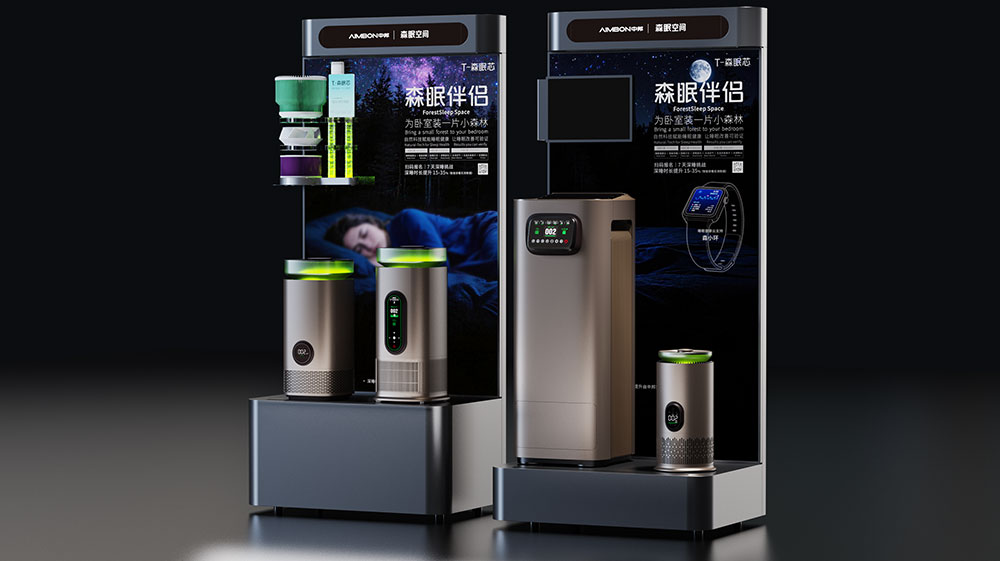
The Aimbon Sleep Environment Health System (SEHS) is positioned to systematically manage the light, air, humidity, temperature, and sound in your bedroom – tackling the environmental dimension. It cannot solve your work stress or cure your arthritis, but it ensures that when you lie down, your bedroom is already ready for deep sleep.
• Air: Water‑Gate Technology – clean, moist, oxygen‑rich
• Light: Sunset simulation, low blue light, non‑intrusive night lights
• Humidity: Automatically maintained at 45‑55%
• Sound: Sleep mode noise <25 dB
When the environment is no longer a disturbing factor, you can then focus on solving other dimensions. That is the value of SEHS – not a panacea, but the essential infrastructure for any sleep improvement plan.
VIII. Conclusion: Poor Sleep Is Not Your Fault, But You Can Start to Change
If you have been sleeping poorly for a long time, stop blaming yourself for “lack of willpower” or “being too anxious.” Sleep is a complex system influenced by many factors. What you need is not to try harder to “force sleep,” but to systematically examine your sleep environment, habits, physical and mental state.
Starting tonight, try turning off all unnecessary light sources in your bedroom, putting your phone in another room, and stopping work at least one hour before bed. If these do not help, perhaps it is time to check your bedroom’s air quality, temperature, and humidity.
Poor sleep is never caused by a single factor, but the good news is that improving sleep does not require a single method either. Every problem you solve brings you one step closer to good sleep.
Tonight, may you find the real culprit disturbing your rest, and then – fall into a peaceful dream.
Aimbon · Sleep Environment Health System (SEHS) – Helping you build a deep‑sleep ecosystem in your bedroom, making every sleep onset more natural and every deep sleep longer.