
In March 2026, international oil prices once again broke through the $100 per barrel mark, with Brent crude briefly hitting $106 and WTI following closely behind at $101. This is not just a severe turbulence in energy markets, but a deep restructuring of the global political and economic landscape. At the same time, the “black rain” pollution triggered by the fires of Middle Eastern war has sounded an environmental alarm. As multiple crises intertwine, a fundamental question emerges: What cascading effects will rising oil prices bring? Will turbulent international conflicts exacerbate environmental pollution? For the sake of environmental protection, should we accelerate the development and utilization of new energy sources? This article will conduct an in-depth analysis from three dimensions.
I. Oil Breaches $100: The Triple Shockwave to the Global Economy
1. The Brake Pad on Economic Growth
Analysts warn that the surge in oil prices caused by the Iran conflict could reduce global economic growth by approximately 0.3 percentage points. This is not alarmist. As the lifeblood of modern industry, every increase in oil prices transmits along the industrial chain to every corner of the economy. Growth forecasts for the U.S. economy in 2026 have been revised downward, with warnings that if the Middle East conflict persists longer, the U.S. economic growth rate faces further downside risks.
2. The Fuel for Inflation
Economists estimate that rising energy prices will increase global headline inflation by about 0.5 to 0.6 percentage points. In the United States, gasoline prices have risen since the beginning of the war, averaging $3.70 per gallon. This price increase is reawakening global inflation risks, posing a severe test for central banks’ monetary policies.
For the Federal Reserve, rising oil prices first raise headline inflation. If oil prices remain high for a long time and spread to the broader price system, the Fed’s pace of rate cuts could be disrupted. For the Eurozone, which has a high external dependence on crude oil and natural gas, the pressure is more direct—soaring oil prices not only raise inflation but also more easily drag down growth. After the sharp rise in oil prices, the market has largely abandoned bets on further rate cuts by the European Central Bank and has even begun to expect 30 to 35 basis points of rate hikes within the year.
3. The Blockage Point in Global Supply Chains
The Strait of Hormuz—the “throat” of global energy transport—carries nearly 20% of the world’s oil trade, with an average of 17 million barrels of crude oil passing through daily. Now shrouded in war, with tanker safety unguaranteed, several shipping companies have suspended services and rerouted. Officials warn that two key points in the global supply chain are subject to restrictions and risks; shipping routes are being diverted, and war risk insurance means an additional $2,000 to $4,000 per container.
As a UN spokesperson stated: “This once again highlights our dependence on fossil fuels, with supply concentrated in just a few regions of the world.”
II. International Turmoil: The Amplifier of Environmental Pollution
1. The Warning of “Black Rain”: War Directly Creates Environmental Catastrophe
When missiles struck oil depots in Iran, “black rain” fell from the skies over Tehran. This was not a natural phenomenon but an ecological nightmare manufactured by war. UN human rights officials pointed out that the toxic pollutants released from the attacks on Iranian oil facilities spread into the air, impacting health and the environment, raising “serious questions about whether the strikes complied with the principles of proportionality and precaution under international humanitarian law.”
World Health Organization officials warned that the “black rain” and “acid rain” appearing in Tehran are “indeed dangerous” for Iranians. Iranian authorities have issued alerts advising people to stay indoors due to the attacks on oil depots. Attacks on oil infrastructure in Bahrain and Saudi Arabia have also raised concerns about “broader regional pollution exposure.”
2. The Vicious Cycle of Fossil Fuel Dependence
UN humanitarian affairs officials explicitly stated that attacks on oil refineries in West Asia could have severe environmental consequences, including impacts on clean water sources and public health—and this against the backdrop of seawater desalination plants in several countries also being attacked.
This vicious cycle reveals a cruel truth: when the international community’s dependence on fossil fuels overlaps with geopolitical conflict, the environment becomes the most innocent victim. War not only destroys homes but also leaves enduring toxins in the air, water, and soil that will not dissipate for decades.
3. The “Reverse Operation” of U.S. Energy Policy
Amidst international turmoil, U.S. energy policy is racing in the opposite direction from environmental protection. Climate experts point out that the current U.S. administration withdrawing from international climate treaties, seizing Venezuelan crude, cutting clean energy, and using government power to revitalize the domestic coal industry—America is increasingly “adding fuel to the fire” for the planet.
Scientists warn that since the new administration took office, U.S. emissions have risen, with researchers attributing this increase to greater coal use—the dirtiest fossil fuel. Studies show that under current measures, the U.S. would add an additional 32 billion metric tons of climate pollution to the atmosphere by 2055, more than four times the current annual U.S. emissions.
However, as one top climate scientist noted: “Despite everything, the global transition to clean energy has accelerated, driven also by clean energy economics. In 2025, wind, solar, and other renewables surpassed coal as the primary producers of electricity. We are at the beginning of the end of fossil fuel economics, and the U.S. is betting on the wrong horse.”
III. For Environmental Protection: Hitting the “Accelerator” on the Energy Transition
1. Opportunity in Crisis: A Historic Window for New Energy
A UN spokesperson explicitly stated when discussing oil prices breaking $100: “This should also serve as an opportunity for us to redouble our efforts to develop renewable energy.”
The oil crisis once again warns nations: excessive dependence on fossil fuels and a single transport artery will ultimately lead to passivity. Countries will accelerate the deployment of new energy, with industries like photovoltaics, wind power, and new energy vehicles experiencing explosive growth. Nations mastering core new energy technologies will occupy a dominant position in the future global landscape. China, as a frontrunner in the new energy field with global advantages in new energy vehicles and the photovoltaic industry, will further enhance its international influence.
2. Strong Policy-Level Promotion
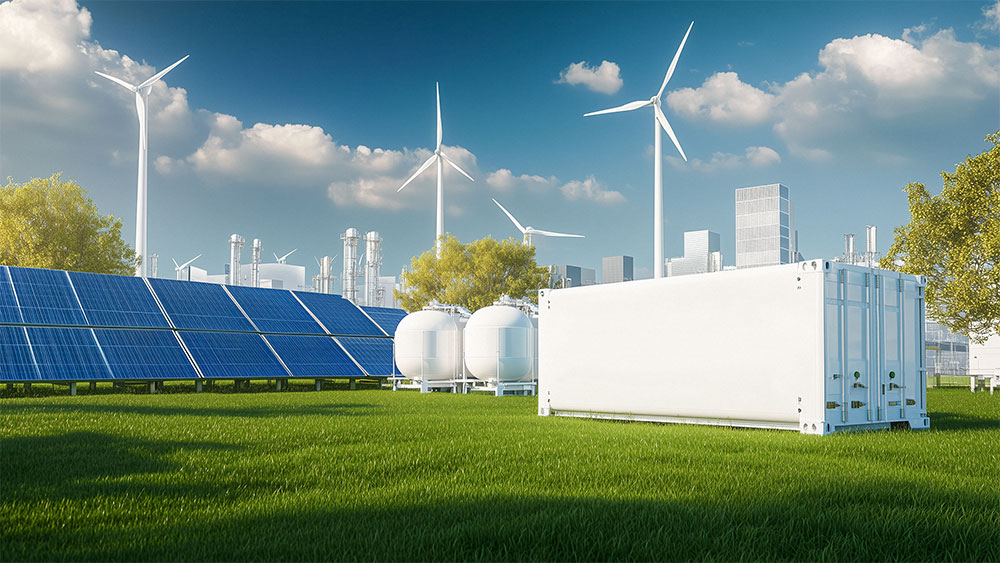
Recent government work reports have outlined new directions for energy work: in terms of green and low-carbon development, clear targets have been set for reducing carbon dioxide emissions per unit of GDP by about 3.8% annually and by 17% cumulatively. Guided by the “dual carbon” goals, efforts will coordinate carbon reduction, pollution reduction, green expansion, and growth. Actions include implementing quality improvement, cost reduction, and carbon reduction initiatives in key industries, promoting the construction of zero-carbon industrial parks and factories, establishing a national low-carbon transition fund, and cultivating new growth points like hydrogen energy and green fuels.
In terms of energy security, efforts focus on enhancing energy resource supply capacity, setting clear targets for comprehensive energy production capacity. This includes strengthening the clean and efficient use of fossil fuels, formulating a plan outline for building an energy powerhouse, accelerating the construction of a new type of power system, promoting smart grids and new energy storage, and expanding the application of green electricity.
The government work report included “future energy” in its deployment of emerging industries for the first time, while also proposing the establishment of a national low-carbon transition fund to cultivate new growth points like hydrogen and green fuels. From early emphasis on supporting infrastructure like hydrogen refueling stations, to incorporating cutting-edge energy technologies into emerging industry cultivation, to this year’s first mention of “future energy” supported by a low-carbon transition fund, the national focus on energy development has evolved from supplementary substitution to forward-looking positioning and strategic cultivation.
3. A Rational View: Future Energy Does Not Mean Zero Environmental Impact
However, while accelerating the development of new energy, a clear head must be maintained. Analyses point out that future energy does not equal zero environmental impact. Identifying and preventing potential ecological and environmental risks at the industry’s initial stage is the only way to truly walk this new path:
• New materials may bring new pollution: Perovskite solar cells contain lead. New battery systems involve various chemical substances whose ecological and environmental impacts have not yet been fully assessed. Catalysts and membrane materials used in hydrogen production also carry potential pollution risks.
• Resource consumption cannot be ignored: Green hydrogen production relies on large quantities of fresh water, requiring coordinated consideration when deploying extensively in water-stressed areas. The construction of new energy bases in desert and barren areas involves large-scale land use, and the impact on fragile ecosystems needs scientific evaluation.
• Waste recycling systems need forward planning: New energy storage batteries, hydrogen fuel cells, and next-generation photovoltaic components all have lifespans and will enter concentrated retirement periods in the future. If recycling technology systems, responsibility mechanisms, and disposal standards are not established in advance, this could evolve into new solid waste problems.
Embedding ecological and environmental risk assessment into the entire process of future energy technology research and project layout, building environmental defenses from the starting line of the industry, ensuring that future energy is truly clean energy from day one—this is both an inherent requirement for building a healthy environment and a fundamental prerequisite for future energy to develop steadily and sustainably.
Conclusion: Seeking Turning Points in Crisis
In the spring of 2026, the world stands at a crossroads. Oil prices breaching $100 shock the global economy, war in the Middle East creates “black rain” pollution, and policy reversals in the U.S. “add fuel to the fire” for the planet—these intertwined crises constitute a severe test for humanity.
Yet within crisis also lies opportunity. As UN officials stated, this should also serve as an opportunity to redouble efforts to develop renewable energy. China is already taking action: government work reports clarify green and low-carbon development directions, establish a low-carbon transition fund, cultivate new growth points like hydrogen and green fuels, and promote zero-carbon industrial parks and factory construction.
The International Energy Agency recently released 400 million barrels of crude oil reserves, the largest in history, which has played a role as a price stabilizer in the short term. But true long-term stability does not come from stockpiling oil, but ultimately from escaping dependence on oil.
As “black rain” sounds the alarm and oil prices force a transition, humanity finally has the opportunity to break free from the vicious cycle of “extract-burn-pollute-war” and move towards a truly clean, sustainable future. This is not idealistic rhetoric, but a realistic choice for survival. Because ultimately, what we must leave for future generations is not an Earth torn apart by war and pollution, but a blue sky where they can breathe freely.